
Discovery & Strategy
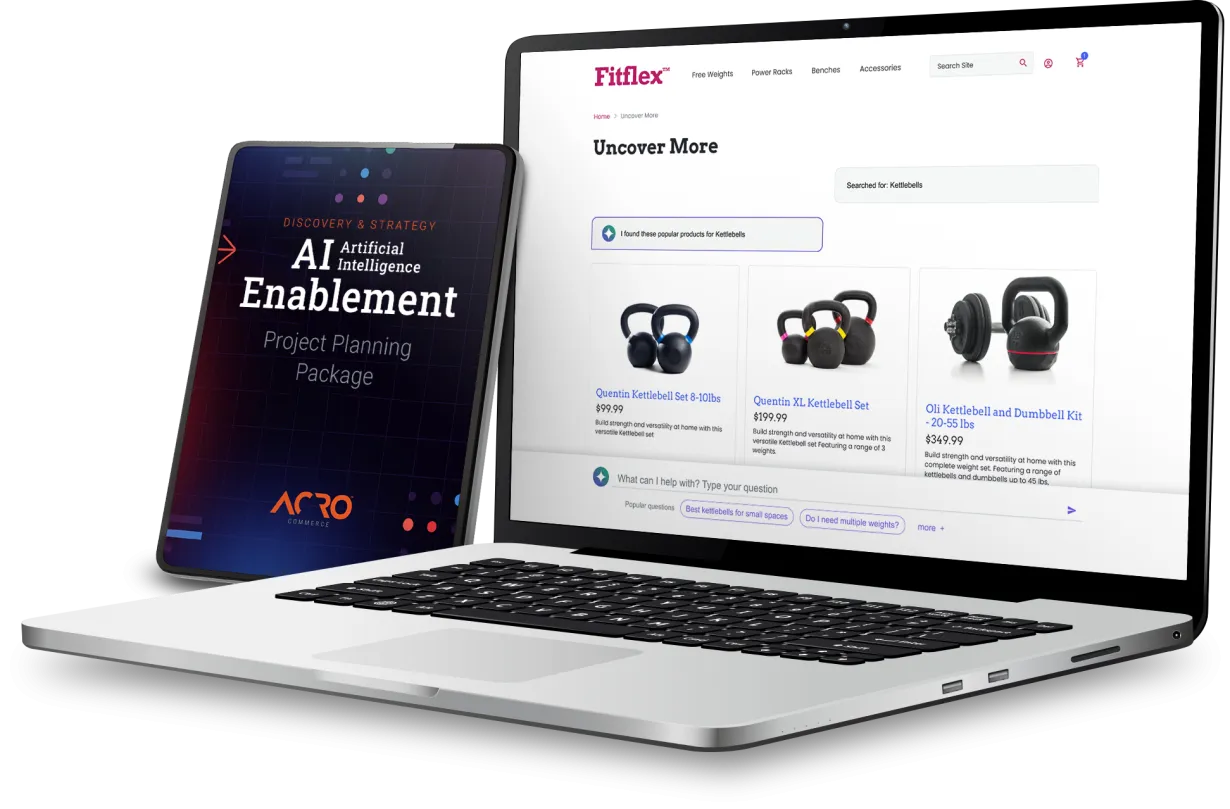
AI Enablement Planning Package
Artificial Intelligence works when the foundation is ready.
Our 4-step Discovery & Strategy Framework prepares your data, workflows, and guardrails so AI improves outcomes instead of amplifying problems.
The result is certainty in the form of a clear plan, with use cases that matter, clean data paths, and a safe deployment approach leaders can trust.
Why Discovery & Strategy pays for itself
- Avoid pilot purgatory
Many organizations struggle to turn AI pilots into bottom-line results. The practices that make the difference are clear goals, tracked KPIs, and a defined adoption roadmap. We build those into the plan from day one. - Fix data before models
AI fails on bad data. Poor data quality costs millions in wasted spend and inefficiency. We map sources, ownership, and sync rules so models consume clean, governed inputs. - Ship value, not experiments
We prioritize a small set of high-value use cases and prove them in a working model before any full build. That way, you ship outcomes that matter instead of pilots that stall. - Governance from the start
We align your approach to recognized frameworks and upcoming obligations, including the National Institute of Standards and Technology (NIST) AI Risk Management Framework and, where relevant, the EU AI Act’s risk-based requirements. You get a deployment that is responsible by default.
What Discovery & Strategy delivers
Clickable prototype
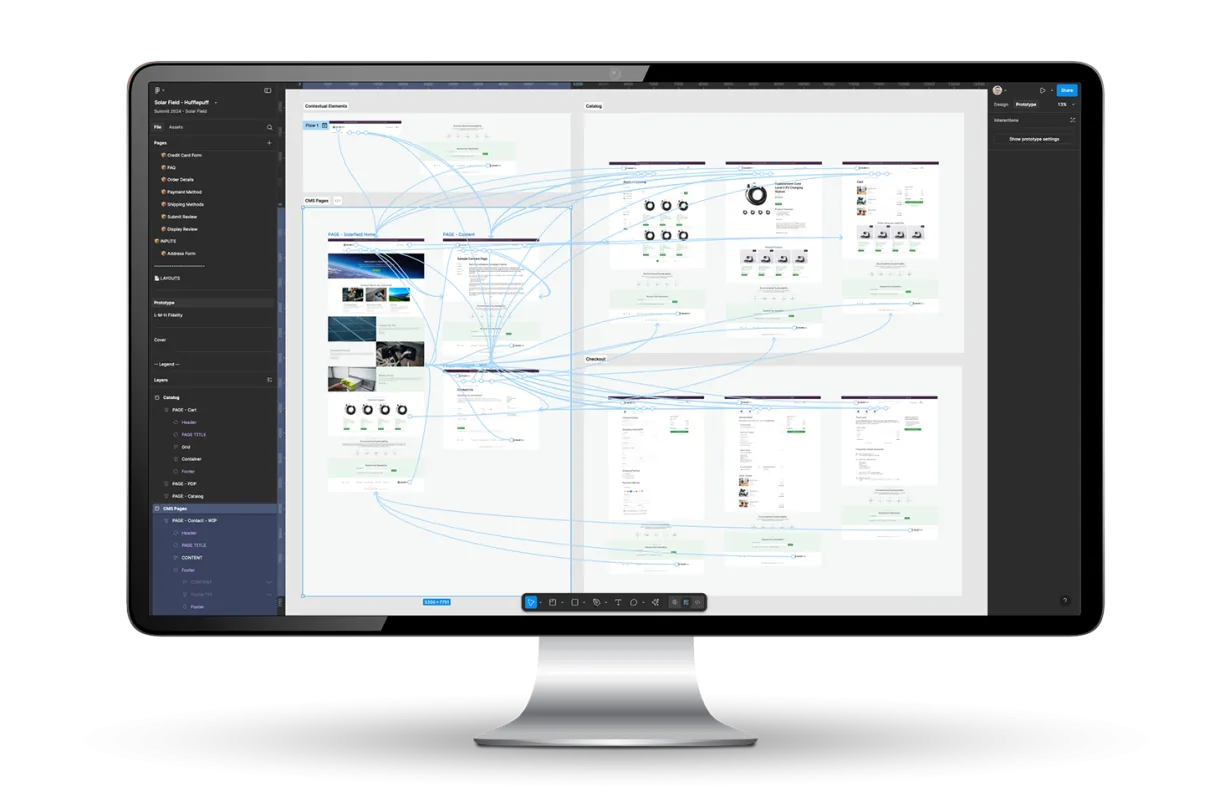
You and your team will get to log in and click through AI-powered flows before you commit to building.
Not slides. A working model that simulates the real experience: semantic product search with citations, next-best product on PDP, anomaly detection for price or margin, demand forecast to ERP, and a human-in-the-loop review where it matters.
We do this with you in the room. Your team clicks through it. Your questions shape the plan. Gaps surface before development, so adjustments are quick and cost you nothing to unwind.
Technical blueprint
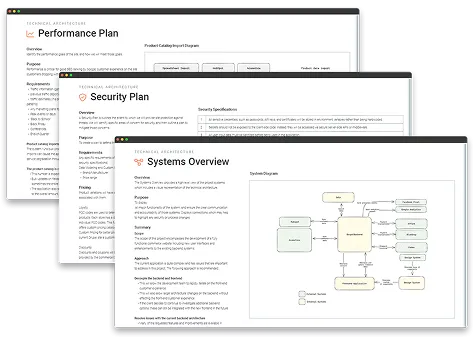
Your AI stack on one map.
Data sources, permissions, and lineage. Retrieval or integration patterns to your ERP, CRM, Product Information Management (PIM), and content management system (CMS). Model choices and serving plan. Evaluation harness with target metrics. Observability, feedback loops, and rollback criteria. Governance mapped to NIST functions and, if applicable, EU AI Act risk tiers.
That diagram, with data models and integration requirements, becomes the blueprint both sides sign before development begins.
Information architecture
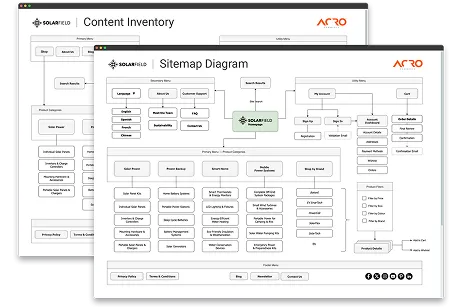
Where AI belongs in your journeys and where it does not.
We define surfaces, prompts, grounding data, and escalation rules so outputs are accurate, traceable, and auditable. We avoid duplication by anchoring AI features to a single source of truth and clear ownership for content and data.
Estimates & phased roadmap
No gambling on open-ended budgets.
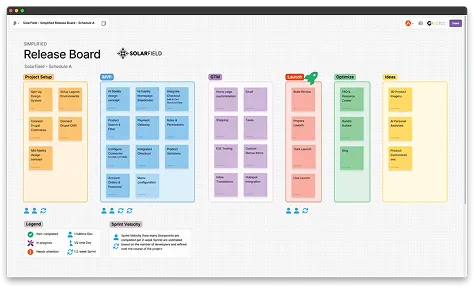
You leave Discovery & Strategy with a backlog ranked by business value and feasibility, each item matched to a budget and delivery window.
Most AI enablement engagements are completed in 4 to 6 weeks, depending on stakeholder availability and the number of workflows we validate together. And if you move forward with development, your highest priority AI enablement will be done in sprints, delivering one or two measurable wins at a time.
What every AI enablement must get right
- Clear use cases
AI pilots fail when they chase novelty. Without a defined business case and tracked KPIs, projects stall in “pilot purgatory.” - Data quality
AI is only as good as its inputs. If ownership, lineage, and sync rules aren’t enforced, bad data feeds bad outcomes at scale. - System integration
ERP, CRM, PIM, and CMS must connect cleanly. Breaks in data flow lead to hallucinations, errors, and rework. - Human-in-the-loop
Not every decision should be automated. Escalation and override rules prevent bad outputs from reaching customers or ops unchecked. - Governance and compliance
NIST AI Risk Management Framework and EU AI Act requirements set the baseline. Ignore them and risk reputational, financial, and legal blowback. - Evaluation and monitoring
Accuracy, safety, and rollback criteria must be measured continuously. Without monitoring, models drift and failures go unnoticed until they reach customers. - Phased roadmap
AI success comes from sequencing. Delivering one or two measurable wins at a time builds trust and avoids overreach.
How the engagement runs
- Kickoff and interviews.
We listen across sales, operations, IT, and support. - Information architecture.
Navigation, catalog rules, and content structures are mapped so the foundation is clear. - Technical planning.
Data movement, integrations, and performance are designed in detail. - Prototype.
A working model shows the most important flows, built on IA and technical planning. - Iteration.
Your feedback drives changes. Edge cases are captured. - Blueprint sign-off.
You approve the prototype, diagrams, and roadmap. Delivery begins with confidence.

What good planning ensures
Plan for clarity. Build with confidence.
Want to learn more about Discovery & Strategy?
Our 4-step Discovery & Strategy Framework helps you clarify priorities, align your team, and map the right path forward across systems and initiatives.
Whether the plan calls for strengthening what you already have or preparing for something new, you get a roadmap designed to deliver from day one.