


DISCOVERY & STRATEGY
Plan For Clarity.
Build With Confidence.
Most digital projects fail because they begin with assumptions rather than facts.
Acro Commerce's 4-step Discovery & Strategy Framework gives you a proven way to uncover buyer needs, align teams, and create a build-ready roadmap before you commit budget, time and effort.
Why start with Discovery & Strategy
"Most digital projects miss because planning is thin:
47% of unsuccessful projects fail due to poor requirements."

Our framework replaces guesswork with a structured process that ensures your investment delivers:
- By identifying friction for staff and customers
- By aligning IT, operations, and sales around shared priorities
- By validating concepts before building
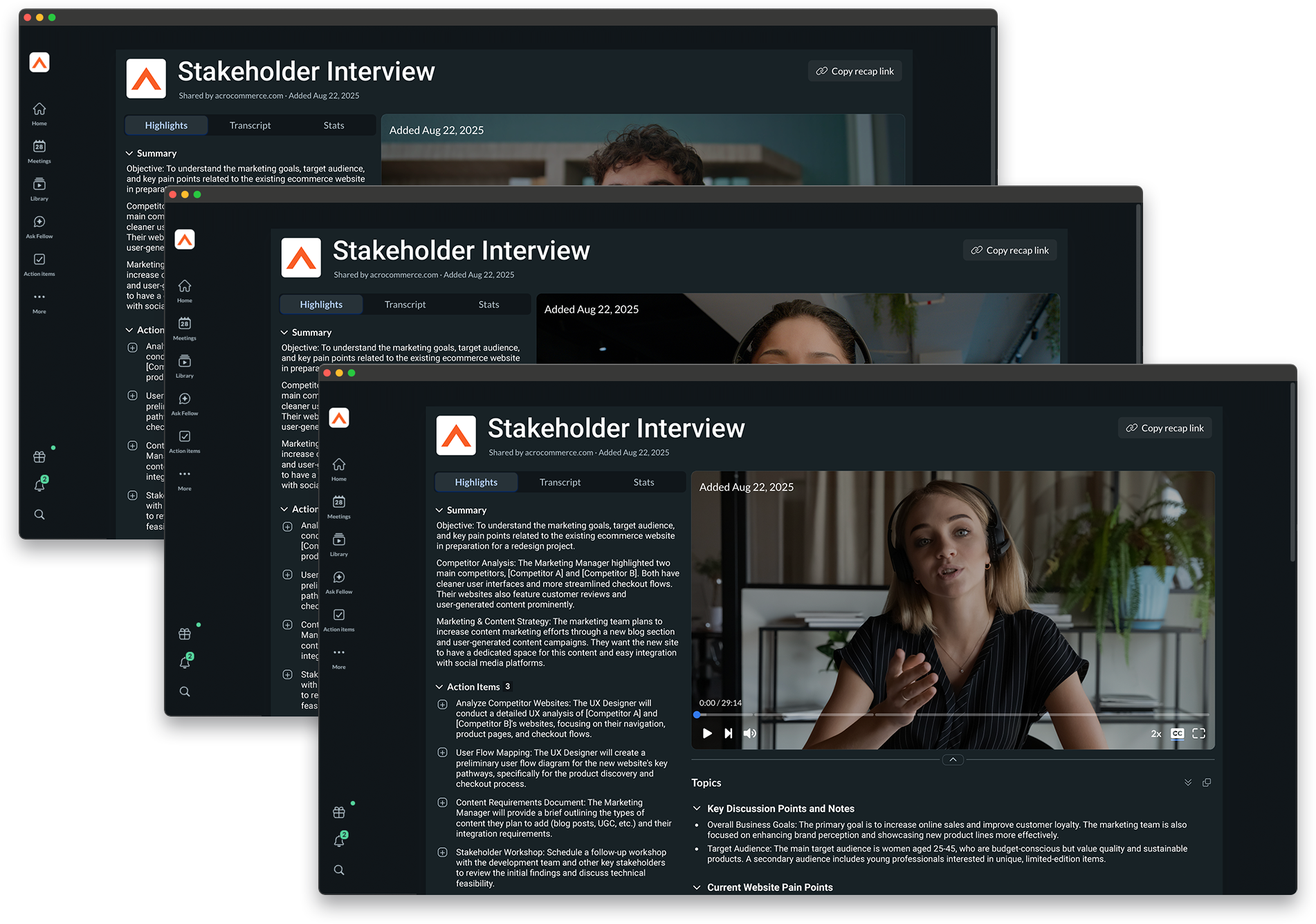
Stakeholder and User Interviews
- Understand priorities and goals
- Identify pain points
- Gather perspectives
- Uncover assumptions
- Align expectations
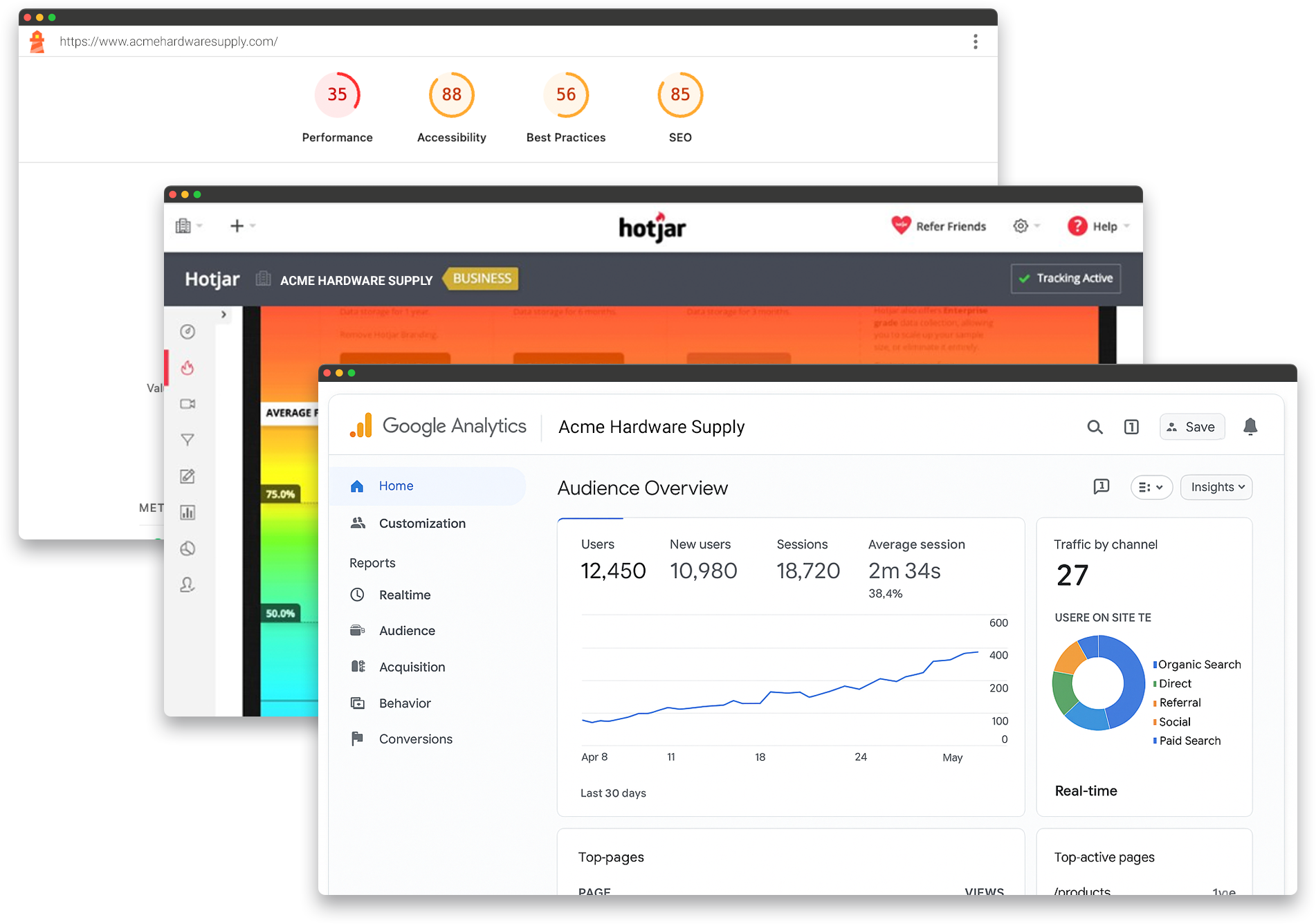
Discovery Exercises
- Conduct a technical audit
- Draft a content inventory map
- Review brand guidelines and design references
- Website analytics review
- Conduct market research and competitor analysis
“Discovery & Strategy gives our clients the clarity to move forward with confidence. By mapping priorities, risks, and opportunities first, we create a foundation that makes every build more effective and every investment easier to measure.”
— Charlee Eason, Acro Commerce Account Manager
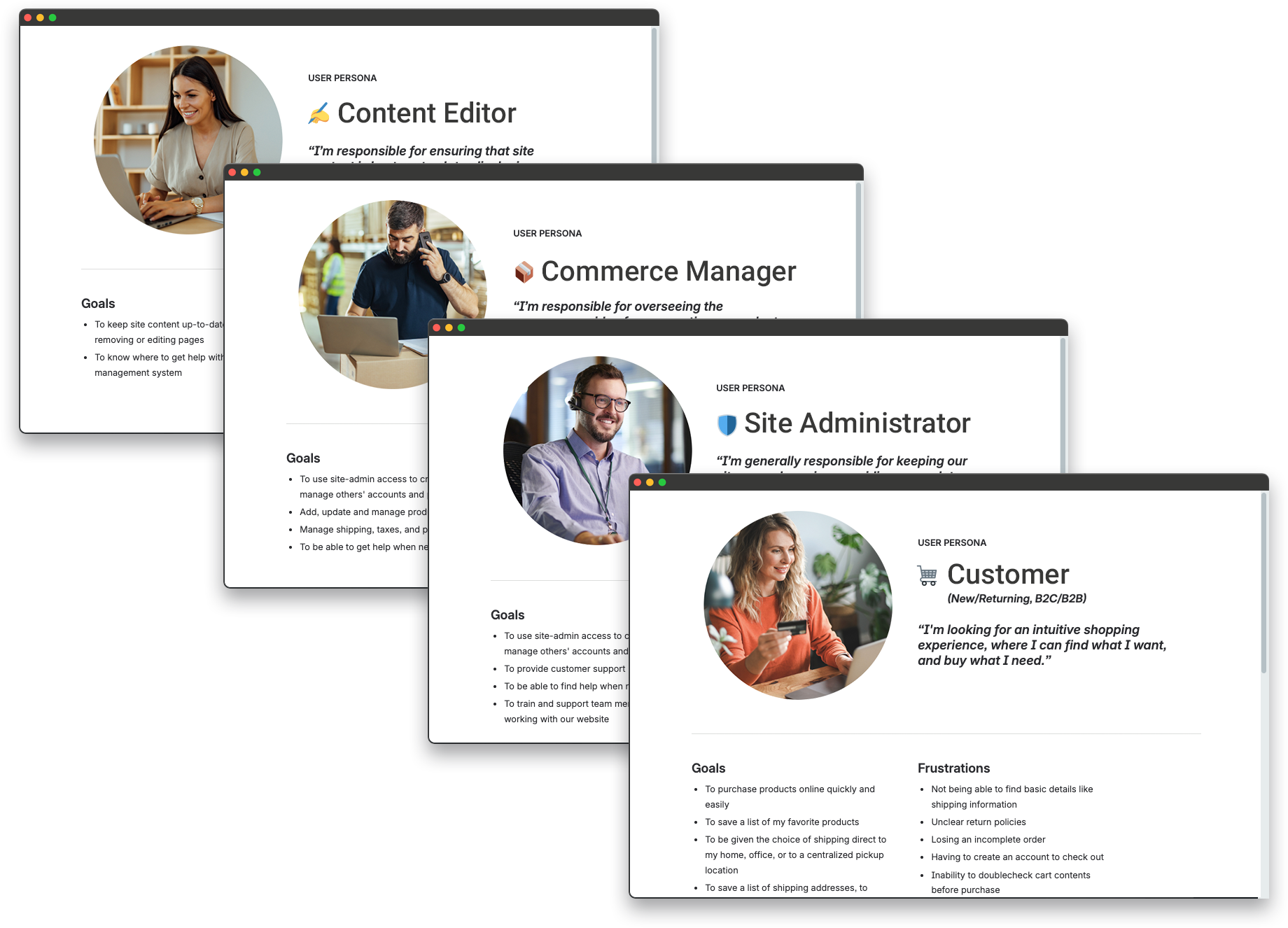
User Personas
Identifying user needs to establish project requirements.
- Humanize the audience
- Expose different user types
- Align the team
- Guide decision-making
- Support user-centred design (UCD)
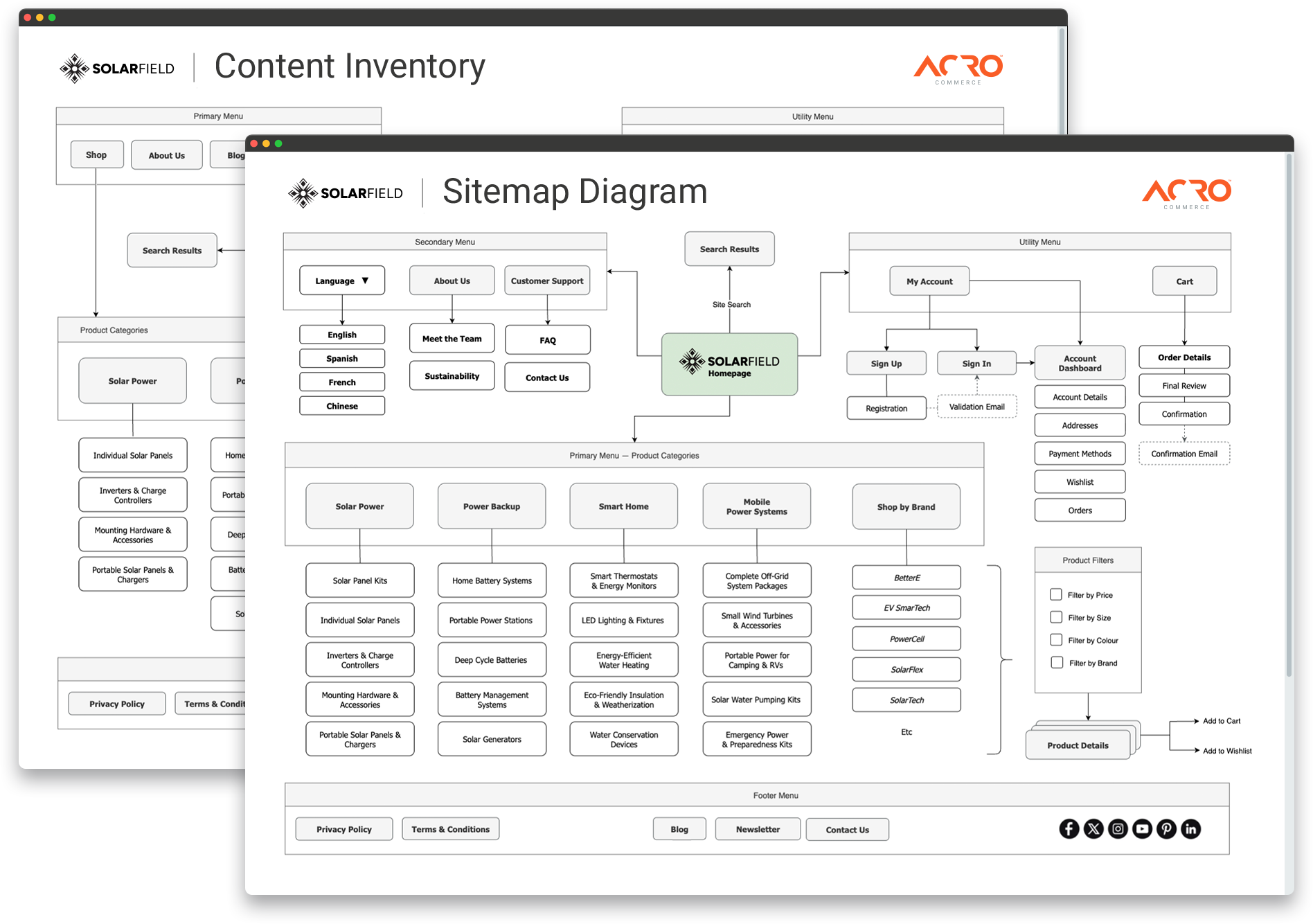
Sitemap Diagram
A sitemap provides an essential blueprint for website development projects. It's a foundational tool that brings value to every stage of a project.
- Clarify structure
- Align stakeholders
- Support user experience (UX)
- Guide design and development
- Identify gaps or redundancies
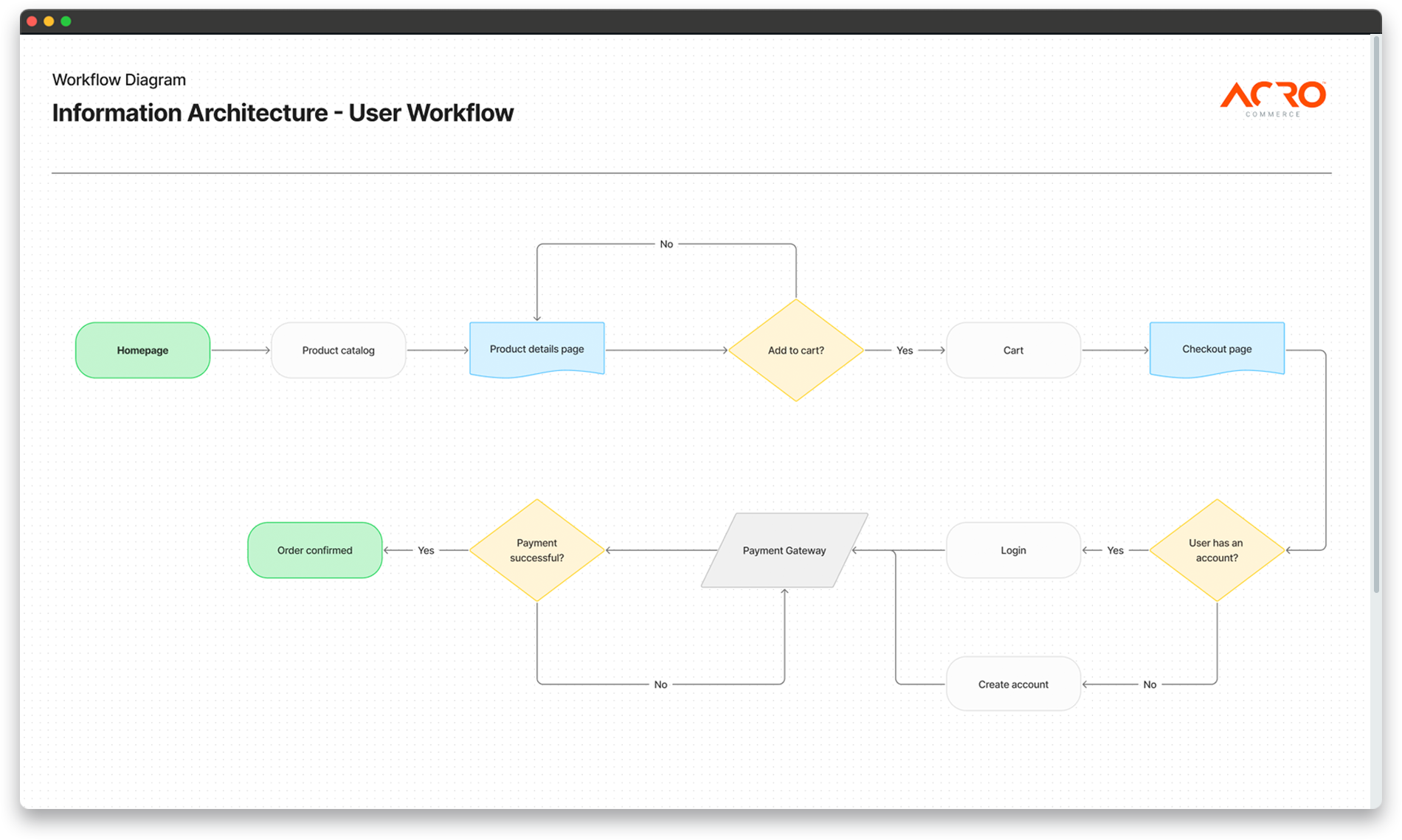
User Workflows
Identifying the path users will take to achieve a certain outcome.
- Understand user goals
- Expose friction points
- Clarify step-by-step journeys
- Improve conversions and usability
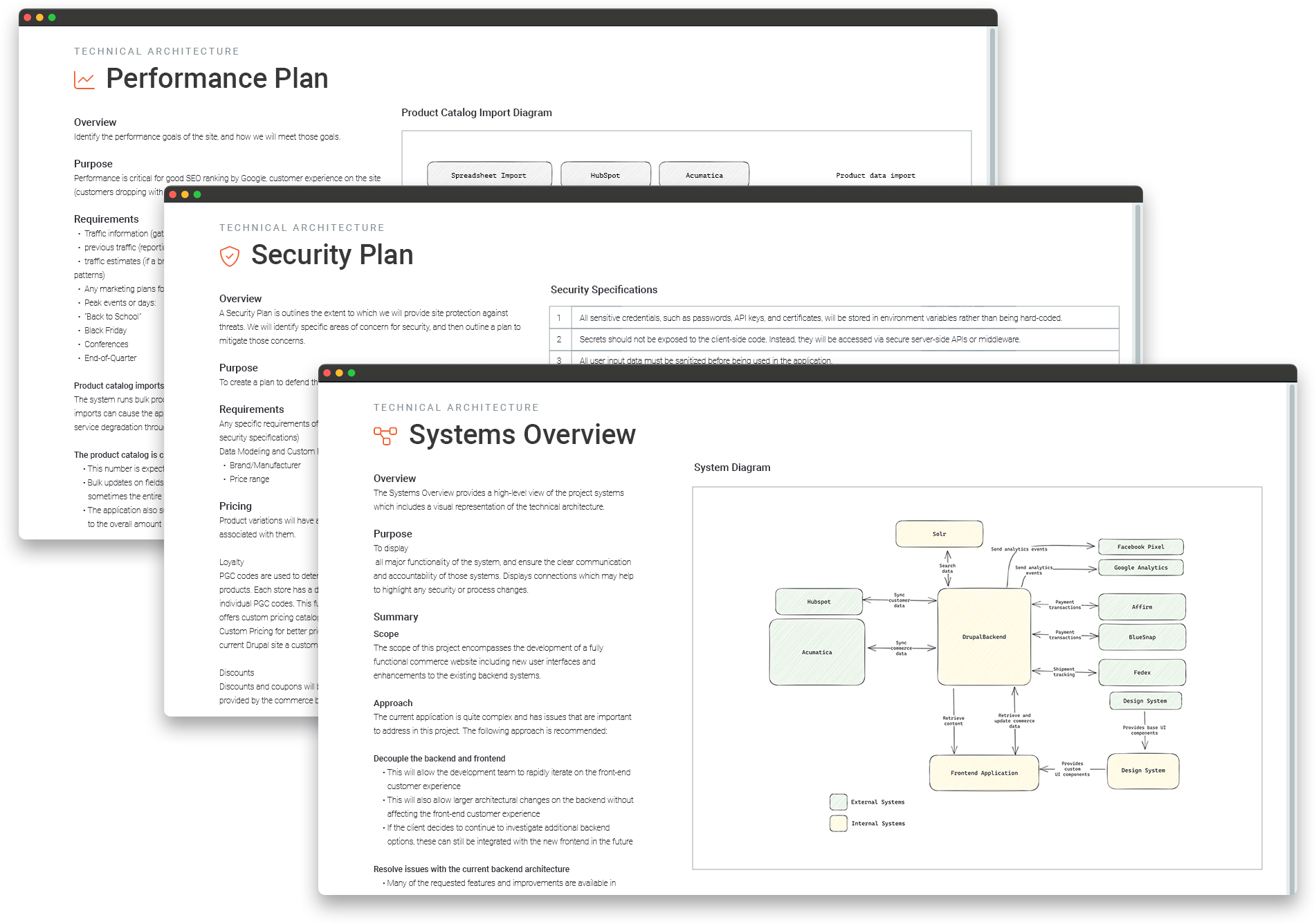
Systems Overview
A high-level view of the project systems, used to guide the project team through development.
- Identify required functionality and integrations
- Plan for scalability, security, and performance
- Identify dependencies and risks
- Facilitate maintenance and onboarding
- Guide development
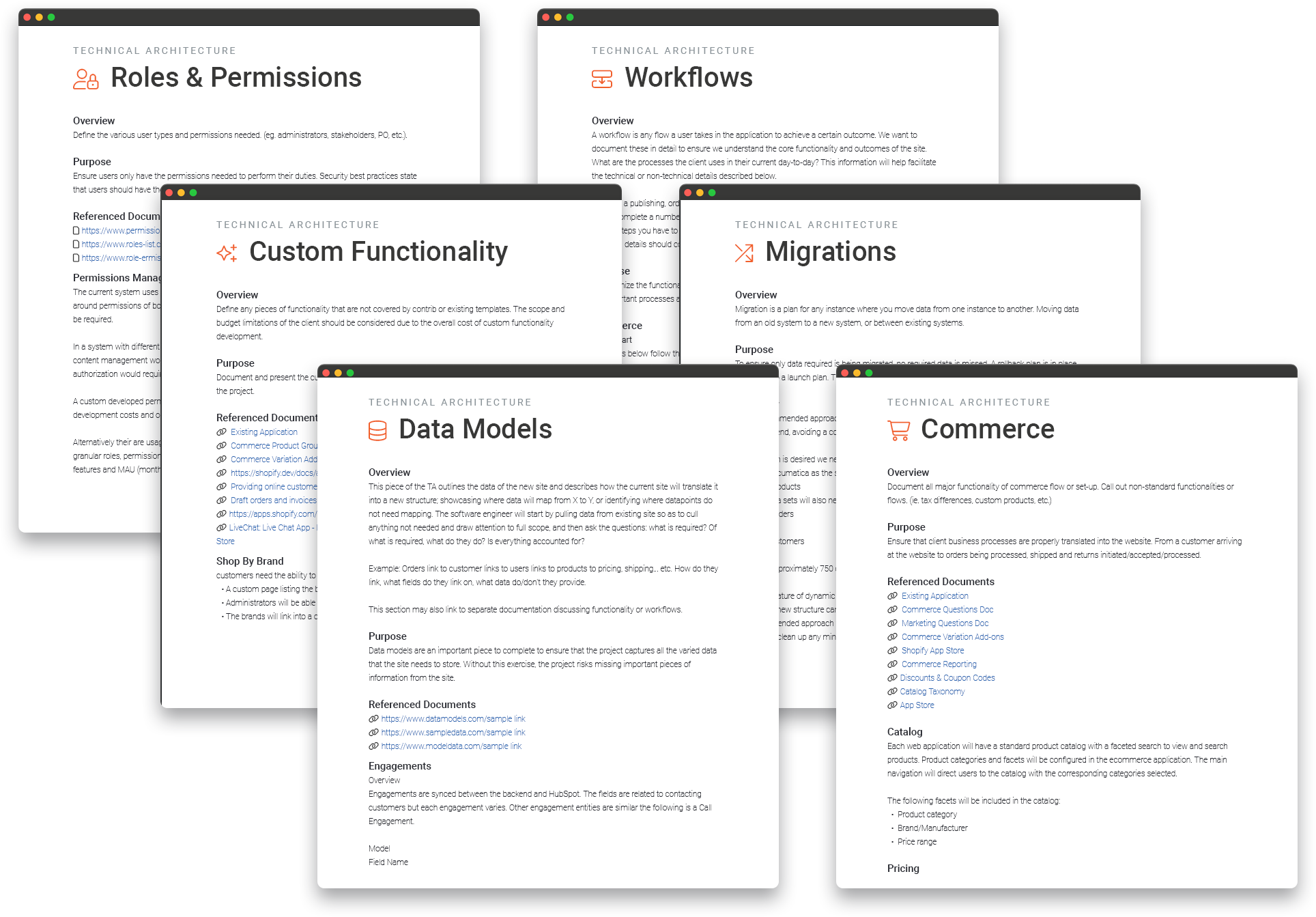
Technical Architecture
A technical architecture provides the blueprint for a system's underlying structure, outlining its technologies, components and interactions.
- Map data model
- Plan development of custom features and functionality
- Define user roles and permissions
- Plan for the digitization of business processes
- Define a data migration plan.
Prototyping
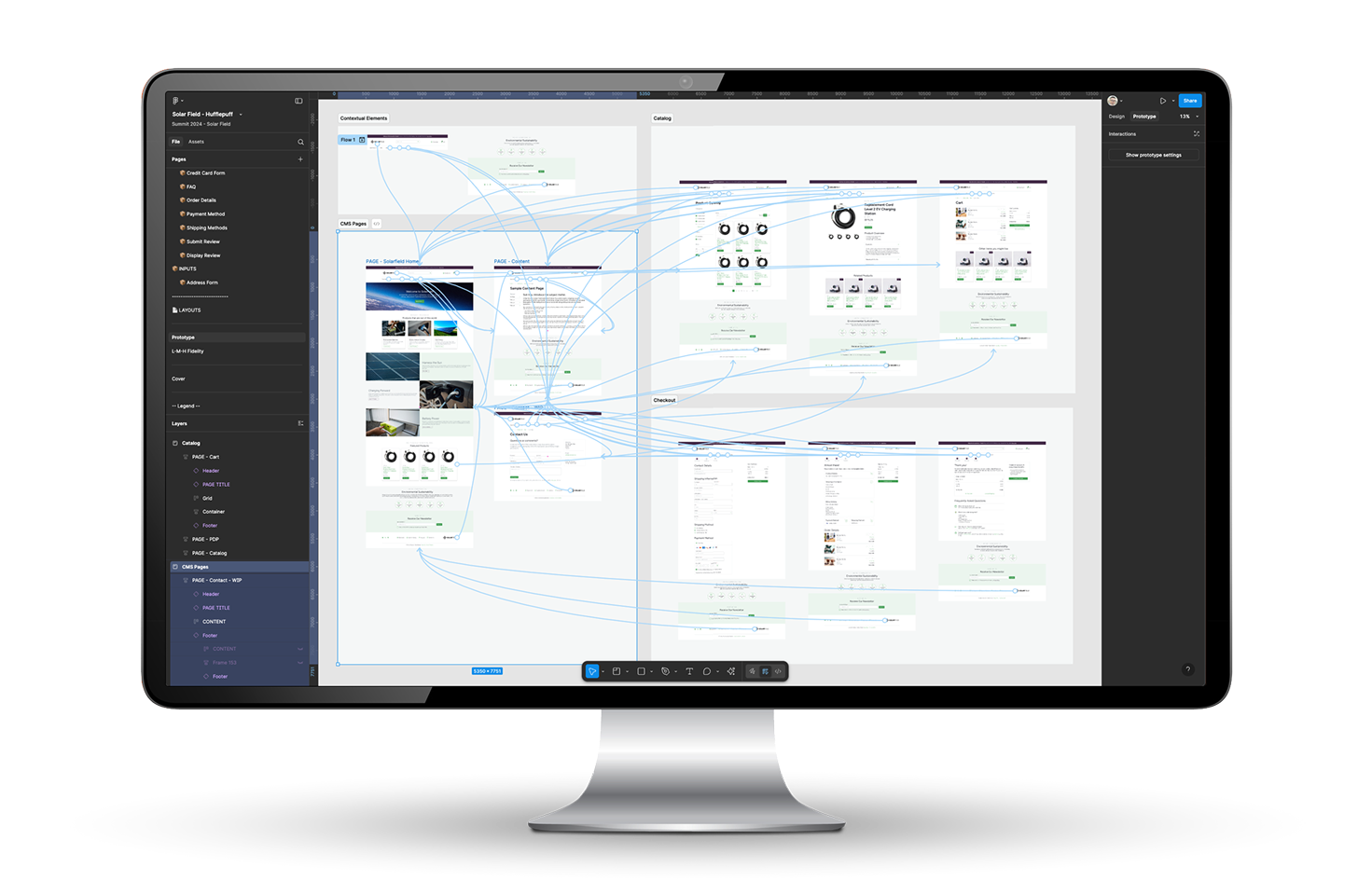
Prototypes enable early concept testing and validation with stakeholders, providing a tangible vision that improves communication and alignment.
- Design iteratively
Facilitates rapid design refinement based on feedback, creating a more user-centred product. - Reduce risk & cost
Catches flows early, preventing expensive changes and rework later in the development process. - Enhance user experience
Focuses on user flows from the outset, leading to more intuitive user flows.
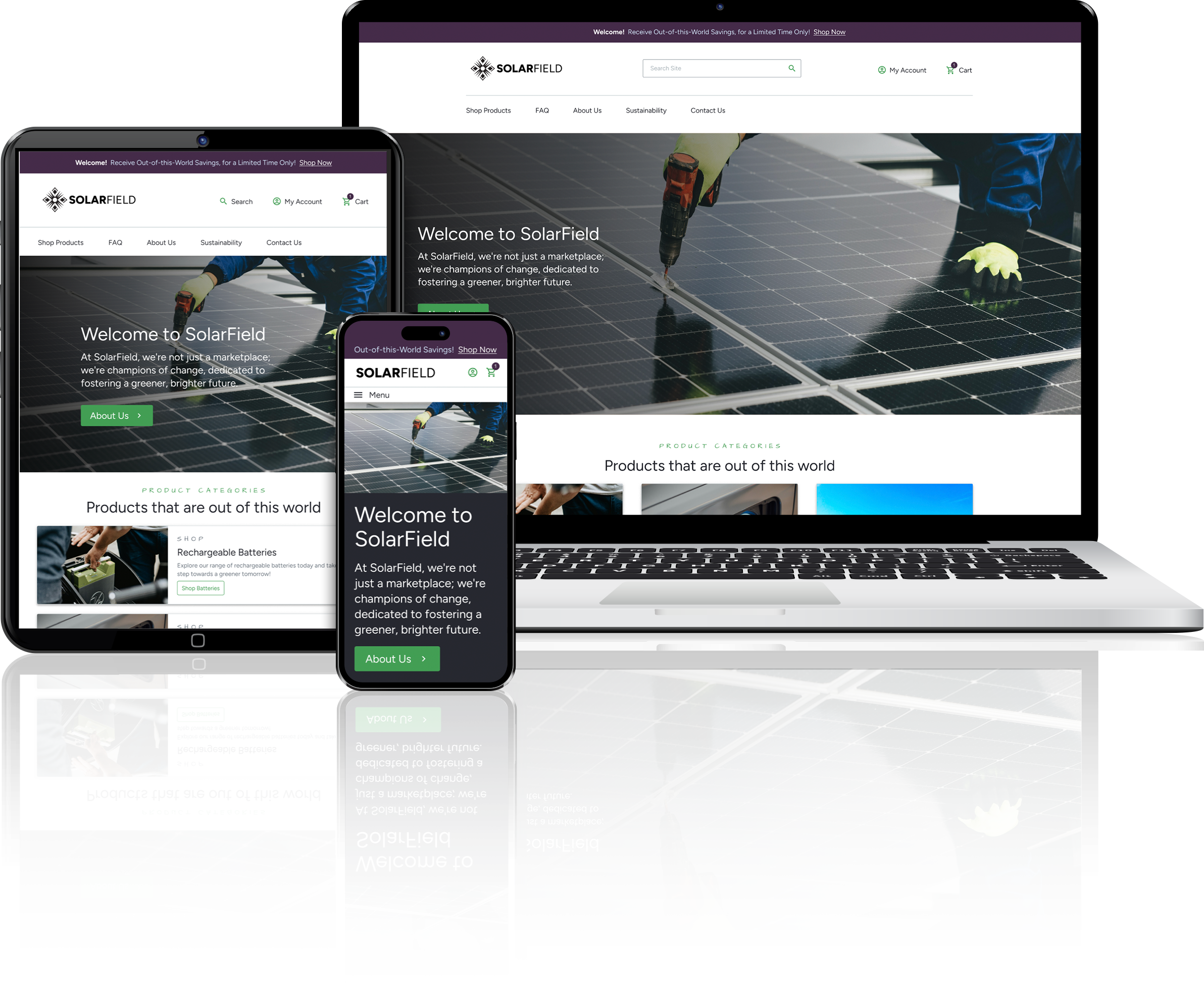
User Interface Design
Creative design concepts are used to establish the overall look and feel of the site's user interface.
- Establish a cohesive visual identity
- Prioritize user experience (UX) and user interface (UI)
- Design a responsive website layout
- Integrate innovative, engaging elements
- Create a visual guide for development
“The roadmap showed us exactly what to build and what to leave for later. That alignment was worth the investment on its own.”
— Mark Alvarez, Director of Digital Strategy, Northern Supply Group
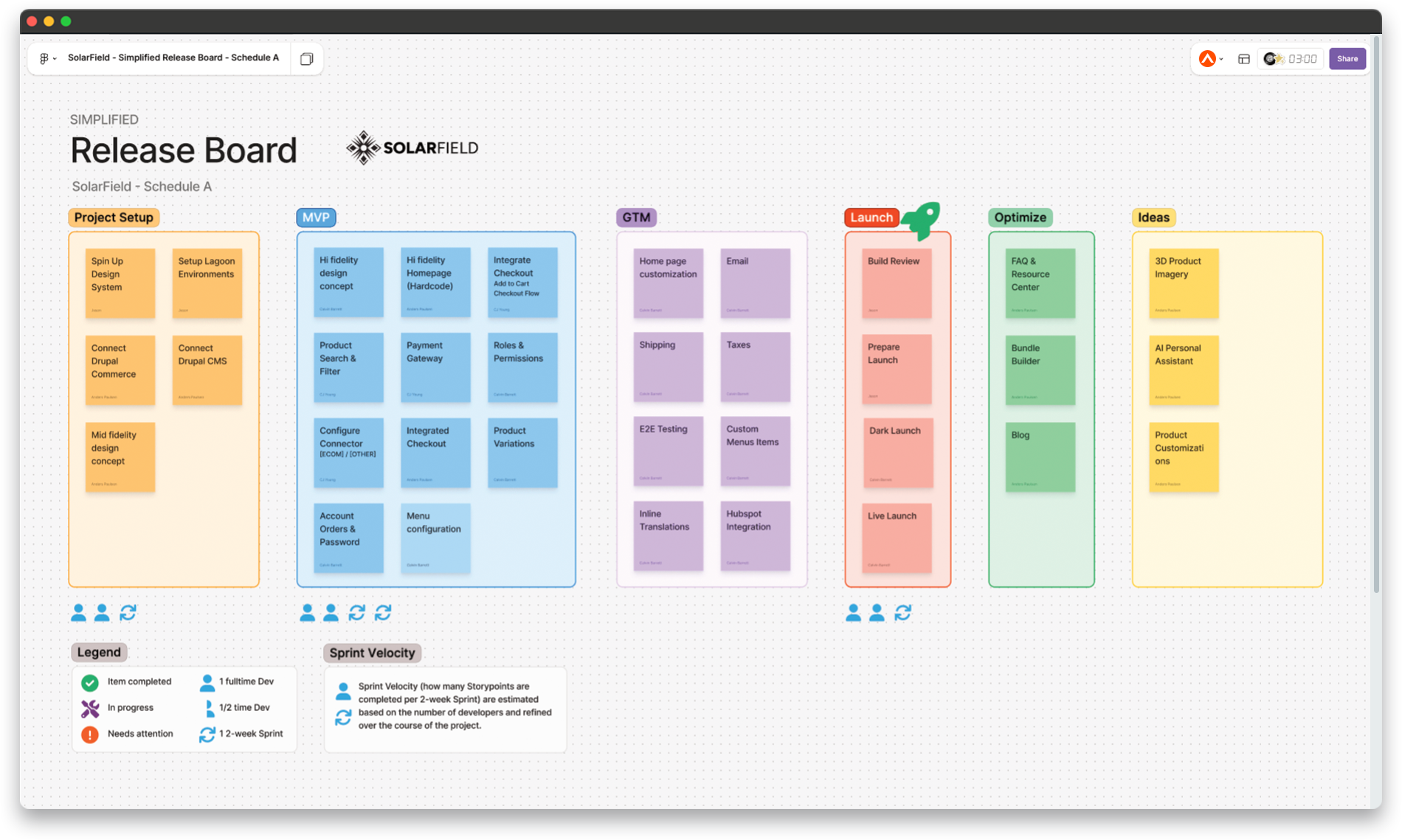
Project Roadmap
This foundational work is vital for minimizing risks, maximizing efficiency, and delivering a successful website.
- Identify MVP and go-to-market requirements
- Prioritize features and functionality to guide development
- Determine project scope and contingency
- Estimate timeline and budget
- Plan future site optimizations and maintenance
Commerce packages
I want a commerce solution that fits my business.
Functionality packages
I want to extend the capabilities of my systems.
Experience packages
I want to improve our buyer experience.
Discovery & Strategy is a fixed-scope, predictable package, so you know exactly what’s included.
Interested, but would rather start small?
DISCOVERY & STRATEGY
Frequently Asked Questions
You receive a comprehensive blueprint for execution. Our Discovery & Strategy for manufacturers delivers a detailed technical architecture, user journey maps, and functional specifications. This acts as your roadmap for ERP + ecommerce, allowing you to obtain fixed-cost development bids and eliminate the "black box" of project estimation.
A typical strategy phase runs 4 – 8 weeks, designed to move fast without disrupting your operations. We conduct focused workshops with your key stakeholders — Sales, IT, and Operations. This efficiency ensures we map your requirements and reduce project risk without requiring your team to pause their day jobs.
Yes. In fact, that is exactly when you should start. A core part of our roadmap is the "Data Audit," where we identify which business rules need to move from the back office to the web. We plan how to expose ERP logic in the storefront — like complex tiered pricing — so you don't build a portal that breaks the moment real data hits it.
Skipping strategy is the #1 cause of budget overruns in B2B. Retail themes cannot handle the complexity of wholesale workflows. Investing in a dedicated strategy phase allows us to uncover technical "dead ends" early. This foresight allows us to design specific approval workflows online and data structures before expensive code is written.
Technology is simple; channel politics are hard. We use the strategy phase to design a model that supports your existing network rather than bypassing it. We plan features that protect distributors while selling D2C, such as "find a dealer" routing or restricting contract pricing online to verified B2B accounts only.
Yes. AI is only as good as the data it feeds on. Part of Discovery & Strategy for manufacturers involves structuring your product data so it is machine-readable. This ensures you have AI-ready data capable of supporting future tools like automated merchandising and predictive ordering, future-proofing your investment.