
Discovery & Strategy
B2B Custom Development Planning Package
Custom development rewards those who plan ahead.
Our 4-step Discovery & Strategy Framework shows where workarounds drain margin, maps how your core systems fit together, and designs solutions that deliver measurable returns.
The result is certainty in the form of a clear plan, with bottlenecks removed, critical systems connected, and custom work that scales without adding complexity.
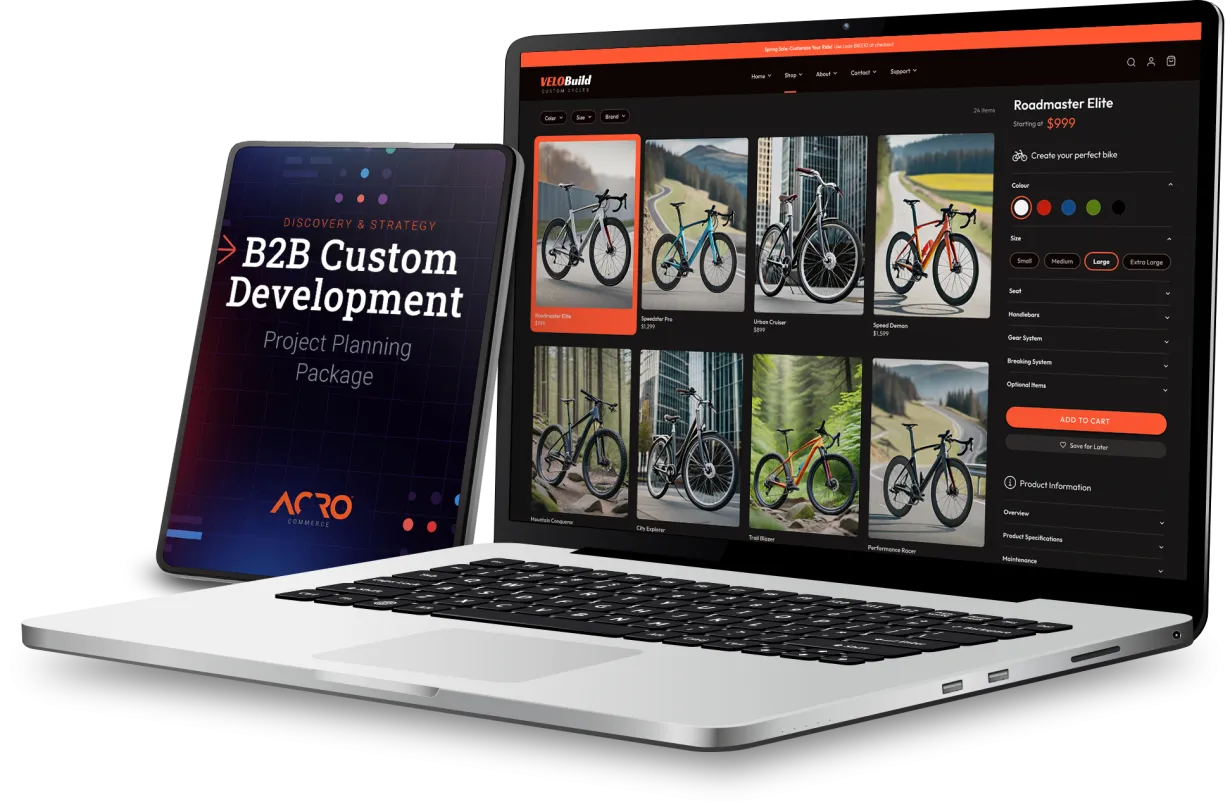
Why Discovery & Strategy pays for itself
- Protect your margins
Quoting delays, pricing disputes, and engineering handoffs quietly erode Earnings Before Interest, Taxes, Depreciation, and Amortization (EBITDA). We surface those leaks early, before they lock in as process debt. - Accelerate delivery
With prototypes, blueprints, and a sequenced roadmap, your custom build starts with clarity. Developers move faster because priorities and dependencies are already decided. - Reduce rework
Custom code without planning often creates new complexity. We design around your ERP, Configure, Price, Quote (CPQ), and pricing engines so extensions reduce friction instead of multiplying it. - Proven outcomes
If one manufacturer can uncover $50 million in margin improvement opportunities by addressing quote-to-cash gaps, what could disciplined planning unlock for you? Within months of that engagement, $4 million was captured directly. Custom development proves the rule: good planning pays for itself many times over.
— Deloitte Analytics, “Manufacturer and Pricing” case study
What Discovery & Strategy delivers
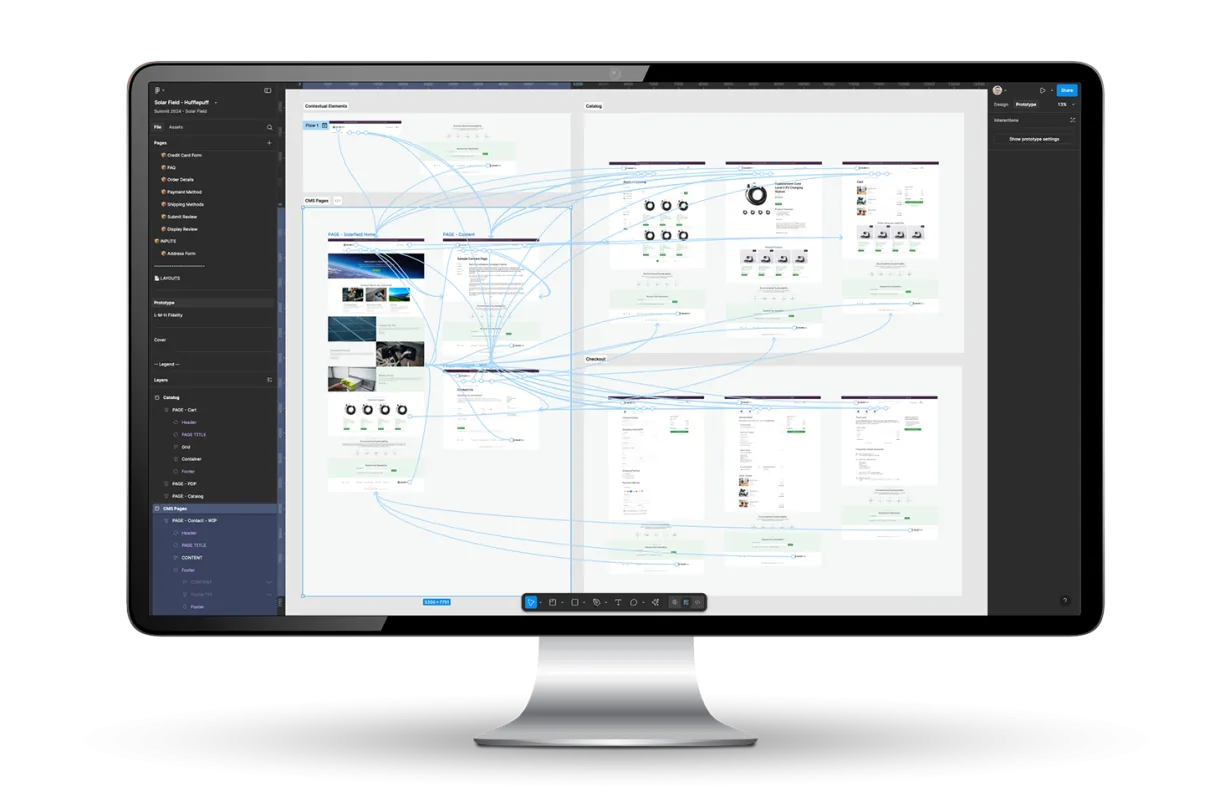
Clickable prototype
You and your team will get to log in and click through the flows that custom development will power, whether quoting, pricing, engineering handoffs, or configurators.
Not slides. A working model that shows how data and decisions move, all before a line of code is written.
We do this with you in the room. Your team clicks through it. Your questions shape the plan. Gaps surface before development, so adjustments are quick and cost you nothing to unwind.
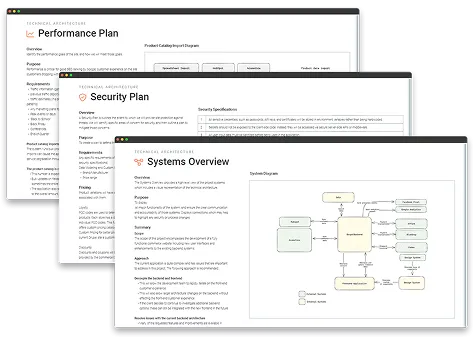
Technical blueprint
Your business on one map: ERP, CPQ, pricing engines, Bill of Materials (BOM), configurators, and ecommerce.
Data ownership, sync cadence, and exception handling are documented. For many teams, this is the first time they see how their core systems actually fit together.
That diagram, with data models and integration requirements, becomes the blueprint both sides sign before development begins.
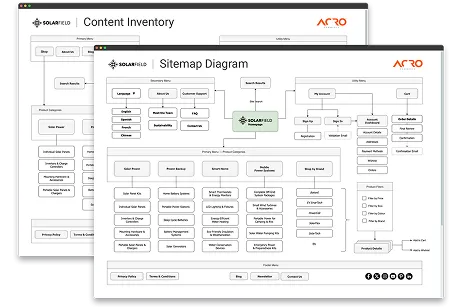
Information architecture
Complex catalogs, multi-tier pricing, and engineering dependencies.
Without structure, custom work tends to collapse under its own weight. We define taxonomies, workflows, and approval paths so the custom layer fits seamlessly with existing systems.
Clean in design. Clean in function.
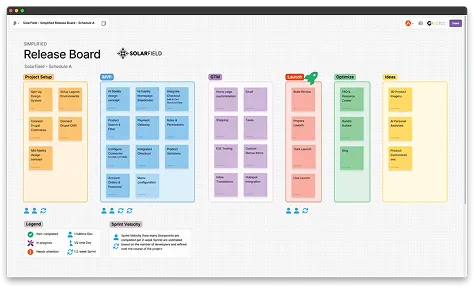
Estimates & phased roadmap
No gambling on open-ended budgets.
You leave Discovery & Strategy with a clear backlog of priorities, each matched to a budget and a delivery window. MVP first. Expansion phases next. Timeline windows set. Ambition turns into a schedule your team can deliver.
Most custom development planning engagements are completed in 6 to 8 weeks. Pace depends on stakeholder availability and the number of edge cases we validate together.
What every B2B custom development must get right
- Quoting and pricing flows
If quoting, pricing, and approvals aren’t mapped, disputes pile up and margins quietly erode. - System integration
ERP, CPQ, pricing engines, and BOM systems must align. Miss a boundary and custom code multiplies complexity. - Data ownership
Without clear rules on who owns each field, duplication and sync errors creep in. That creates costly rework later. - Engineering handoffs
Custom development fails fast when sales and engineering flows aren’t connected. Handoffs stall and deals die in process. - Catalog and workflow design
Complex catalogs and multi-tier pricing collapse without structure. Approvals, taxonomies, and workflows must be defined before code is written. - Performance and scalability
Custom code often runs fast at first, then drags under volume. Performance budgets are the safeguard against hidden bottlenecks. - Roadmap and governance
Every extension must fit a sequenced plan. Skip the roadmap and today’s custom build becomes tomorrow’s technical debt.
How the engagement runs
- Kickoff and interviews.
We listen across sales, operations, IT, and support. - Information architecture.
Navigation, catalog rules, and content structures are mapped so the foundation is clear. - Technical planning.
Data movement, integrations, and performance are designed in detail. - Prototype.
A working model shows the most important flows, built on IA and technical planning. - Iteration.
Your feedback drives changes. Edge cases are captured. - Blueprint sign-off.
You approve the prototype, diagrams, and roadmap. Delivery begins with confidence.
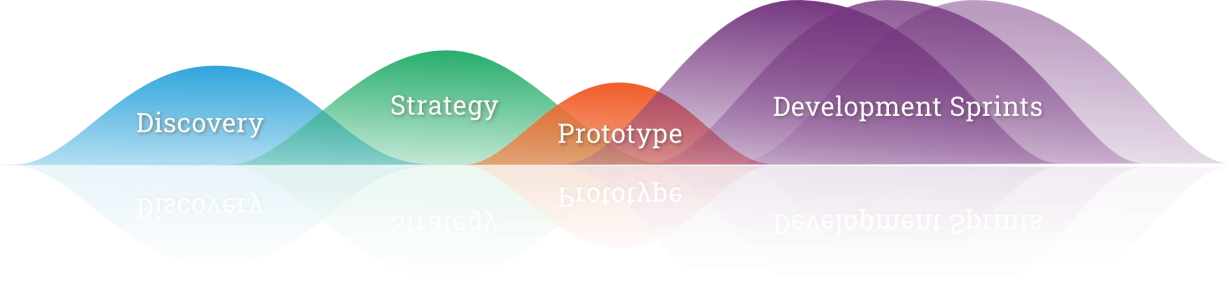
What good planning ensures
Plan for clarity. Build with confidence.
Want to learn more about Discovery & Strategy?
Our 4-step Discovery & Strategy Framework helps you clarify priorities, align your team, and map the right path forward across systems and initiatives.
Whether the plan calls for strengthening what you already have or preparing for something new, you get a roadmap designed to deliver from day one.