
Discovery & Strategy
B2B Portals Planning Package
Portals fail when they're not planned properly. Ours succeed because every dependency is mapped first.
Our 4-step Discovery & Strategy Framework defines people, systems, and processes before you spend a dollar on development.
The result is certainty in the form of a clear plan, with a phased roadmap and a portal strategy that scales without risk.
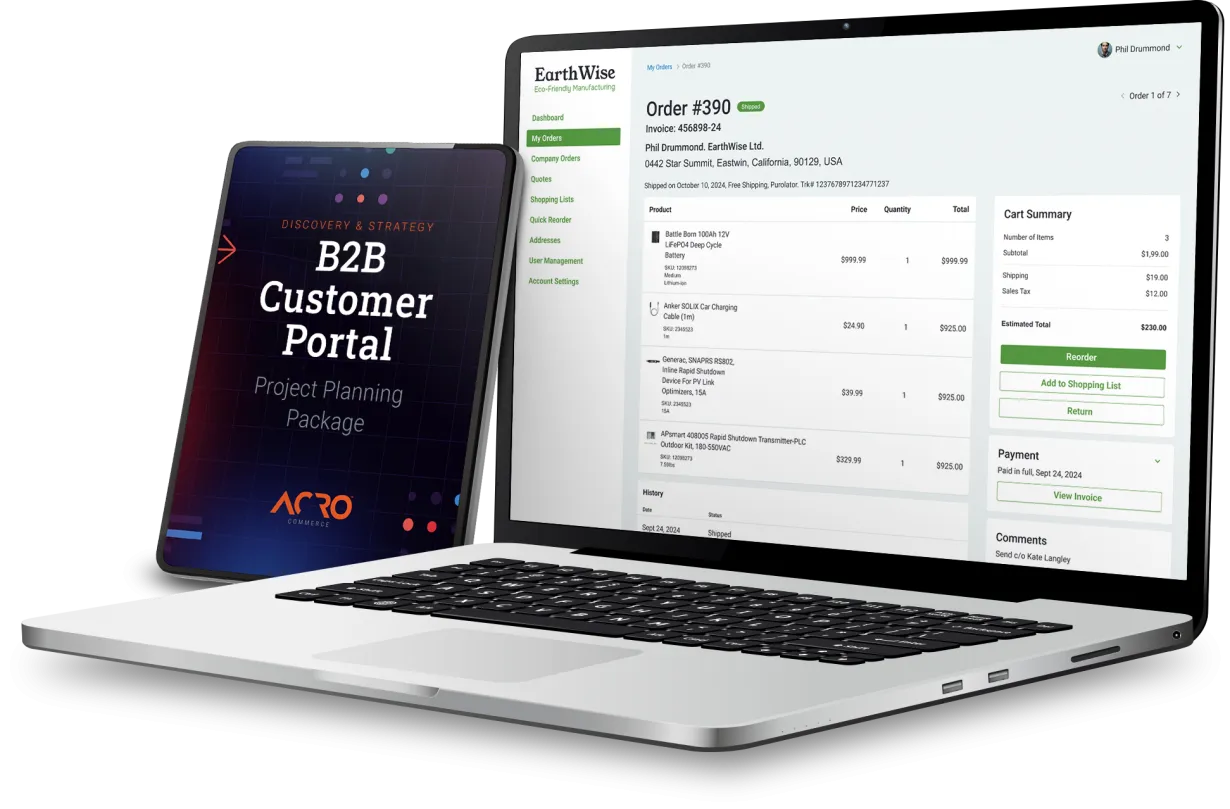
Why Discovery & Strategy pays for itself
- Prevent costly rework.
Portals often break down in the details. A role is misconfigured. Catalogs sprawl. ERP data does not sync. Fixing that mid-project can cost multiples of the planning investment. In one engagement, the prototype revealed a permissions model issue that would have triggered a six-figure rebuild. - Accelerate delivery.
A signed blueprint and a working prototype give design and development a target they can hit. Teams move faster and avoid resets. - Earn trust inside and out.
Your people see their needs reflected in the plan. Customers get accurate pricing, inventory, and order history from day one. - Proven value.
Clients who invest in Discovery & Strategy avoid change orders and scope resets that would cost tens of thousands more. Planning is not an extra step. It is the step that makes the rest possible.
What Discovery & Strategy delivers
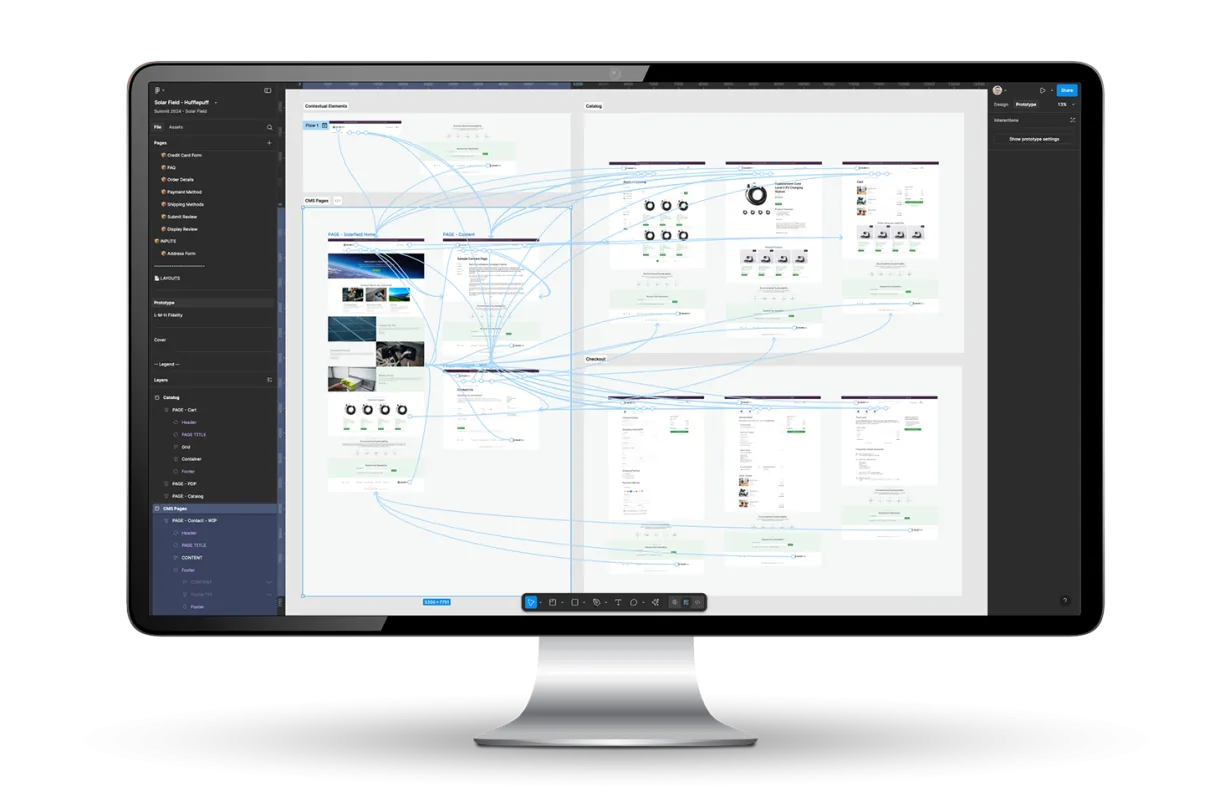
Clickable prototype
You and your team will get to log in and click through your own portal before we touch code.
Not slides. Not static screens. A working model that feels real enough to test. Sales checks how accounts and orders behave. Operations sees how inventory appears. Leadership tests how it scales.
We do this with you in the room. Your team clicks through it. Your questions shape the plan. Gaps surface before development, so adjustments are quick and cost you nothing to unwind.
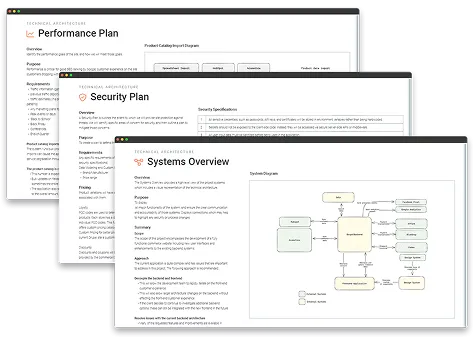
Technical blueprint
Picture your business on a single diagram.
ERP to portal. Pricing tied to accounts. Inventory back to order history. CRM and PIM are connected where they belong. For many teams, this is the first time the picture matches how the business runs.
That diagram, with data models and integration requirements, becomes the blueprint both sides sign before development begins.
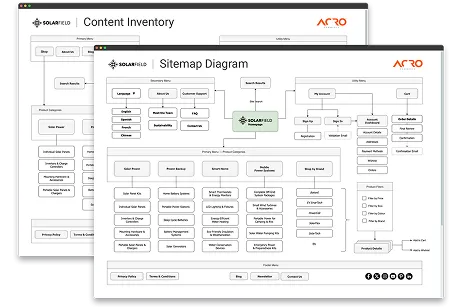
Information architecture
Without structure, a portal collapses under its own weight.
Large catalogs. Many roles. Approvals and terms. We define navigation, catalog rules, and content structures so buyers land where they need to be.
Clean in design. Clean in function.
Estimates & phased roadmap
No gambling on open-ended budgets.
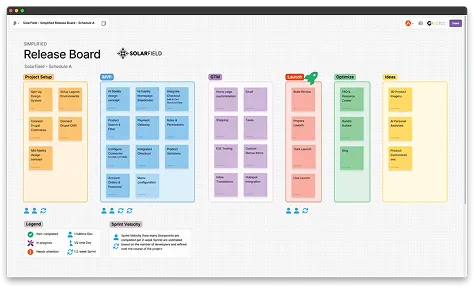
You leave Discovery & Strategy with a clear backlog of priorities, each matched to a budget and a delivery window. MVP first. Growth phases next. Timeline windows set. Ambition turns into a schedule that a team can deliver.
Most B2B portal discovery & strategy engagements are completed in six to eight weeks. Pace depends on stakeholder availability and the number of edge cases we validate together.
What every B2B portal must get right
- ERP as source of truth
We do not replace your ERP. We design data flows so pricing, contracts, inventory, and order history appear where they should and when they should. - Roles and approvals
Company accounts. Buyers. Approvers. Sales reps. Clear permissions prevent mistakes and protect trust. - Catalog, pricing, and visibility
Who sees what. At what price. Under which terms. No surprises at checkout. - Search and performance
Findability and speed for large catalogs. Performance budgets that keep the experience fast. - Security and compliance
Authentication, authorization, and auditability that satisfy IT from day one. - Growth architecture
Multi-site and multi-region plans that avoid duplication and set you up for scale.
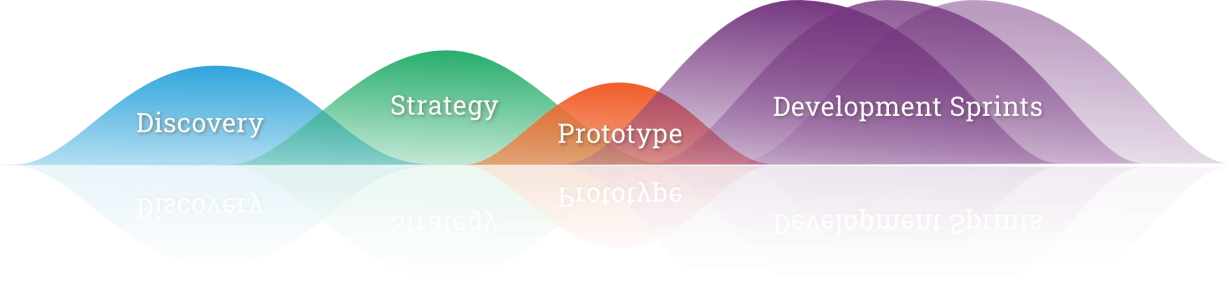
How the engagement runs
- Kickoff and interviews. We listen across sales, operations, IT, and support.
- Information architecture. Navigation, catalog rules, and content structures are mapped so the foundation is clear.
- Technical planning. Data movement, integrations, and performance are designed in detail.
- Prototype. A working model shows the most important flows, built on IA and technical planning.
- Iteration. Your feedback drives changes. Edge cases are captured.
- Blueprint sign-off. You approve the prototype, diagrams, and roadmap. Delivery begins with confidence.
What good planning ensures
Plan for clarity. Build with confidence.
Want to learn more about Discovery & Strategy?
Our 4-step Discovery & Strategy Framework helps you clarify priorities, align your team, and map the right path forward across systems and initiatives.
Whether the plan calls for strengthening what you already have or preparing for something new, you get a roadmap designed to deliver from day one.