B2B SELF-SERVICE PORTAL
How BlueJeans let B2B buyers skip the sales call
BlueJeans by Verizon, video meetings for business
BlueJeans’ business customers found their plan online, then had to phone to buy it. Sales staff typed every order into Zuora by hand. In 2017, Acro built a B2B self-service portal that tied the purchase to subscription billing and account set-up.
Highlights

An online order still had to become a working subscription
Taking payment online wouldn’t help if staff still set up every subscription by hand. A B2B self-service portal has to reach the systems behind the sale: billing, customer accounts and access to the service.
BlueJeans, based in Silicon Valley, California, ran a video meeting service. Businesses used it to host conferences, large meetings and interactive events online. Companies around the world used it, including Facebook, Intuit and ADP. It was recognized in Gartner’s “Magic Quadrant for Meeting Solutions.”
Every sale took a phone call & a retyped order
A customer found the right plan on the BlueJeans website. Then they had to pick up the phone to buy it.
On the other end of the call, a salesperson typed the customer’s details into Zuora, the system that ran BlueJeans’ subscriptions and billing. The website ran on Drupal and shared nothing with Zuora, so every detail was keyed in again.
Once the order was in, BlueJeans emailed the customer a login. Only then could they sign in and download a product key.
None of it was automated. That swivel-chair work, from one screen to the next, took hours of staff time.
BlueJeans needed customers to finish the purchase online, with billing and account set-up handled behind the scenes.
Why BlueJeans chose Acro
Each checkout had three jobs: take the purchase, create the subscription in Zuora and set up the customer’s BlueJeans account. If set-up failed, Salesforce had to hear about it. The store itself would run on Drupal Commerce.
Each order had to travel from checkout to billing to account set-up, with no one typing it again.
Acro brought Drupal developers, front-end developers, UX designers and a dedicated architect.
Acro also knew Zuora well. Matt Glaman, Acro’s lead developer on the project, wrote the Zuora module for Drupal, and the store was built on it. The checkout used Zuora’s hosted card form and read billing information through Zuora’s API. A separate link that BlueJeans built created the subscription itself.
What BlueJeans asked for, and what it took
BlueJeans wanted three things:
- Sell its B2B subscriptions online
- Make buying easier for customers
- Run sales and operations with less manual work
Acro built the store on Drupal 8 and Drupal Commerce 2 at store.bluejeans.com, hosted on Acquia. Releases to the live store were being prepared by late August 2017. In October, Acro added Spanish, French and German translations.
A checkout that set up the customer’s account
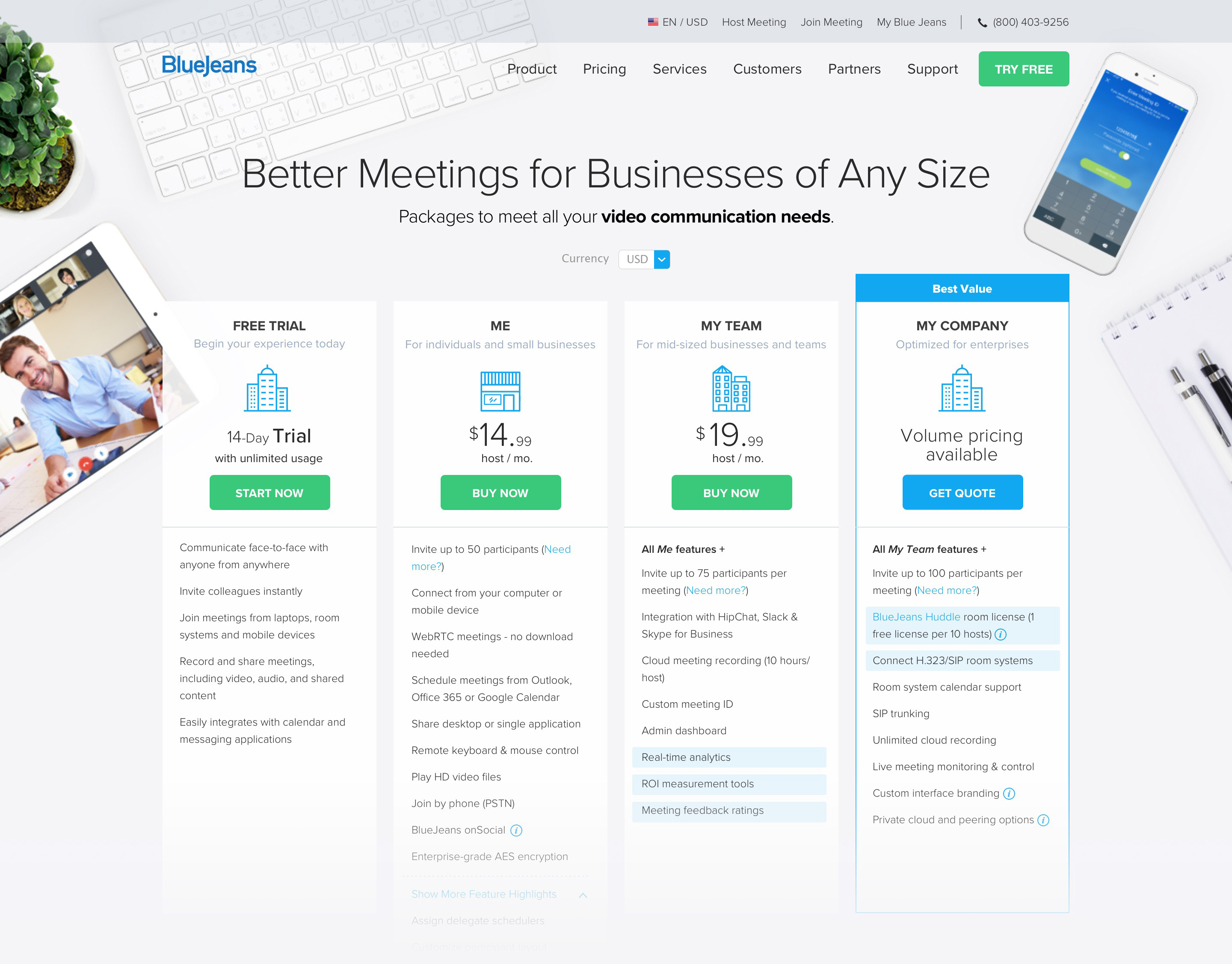
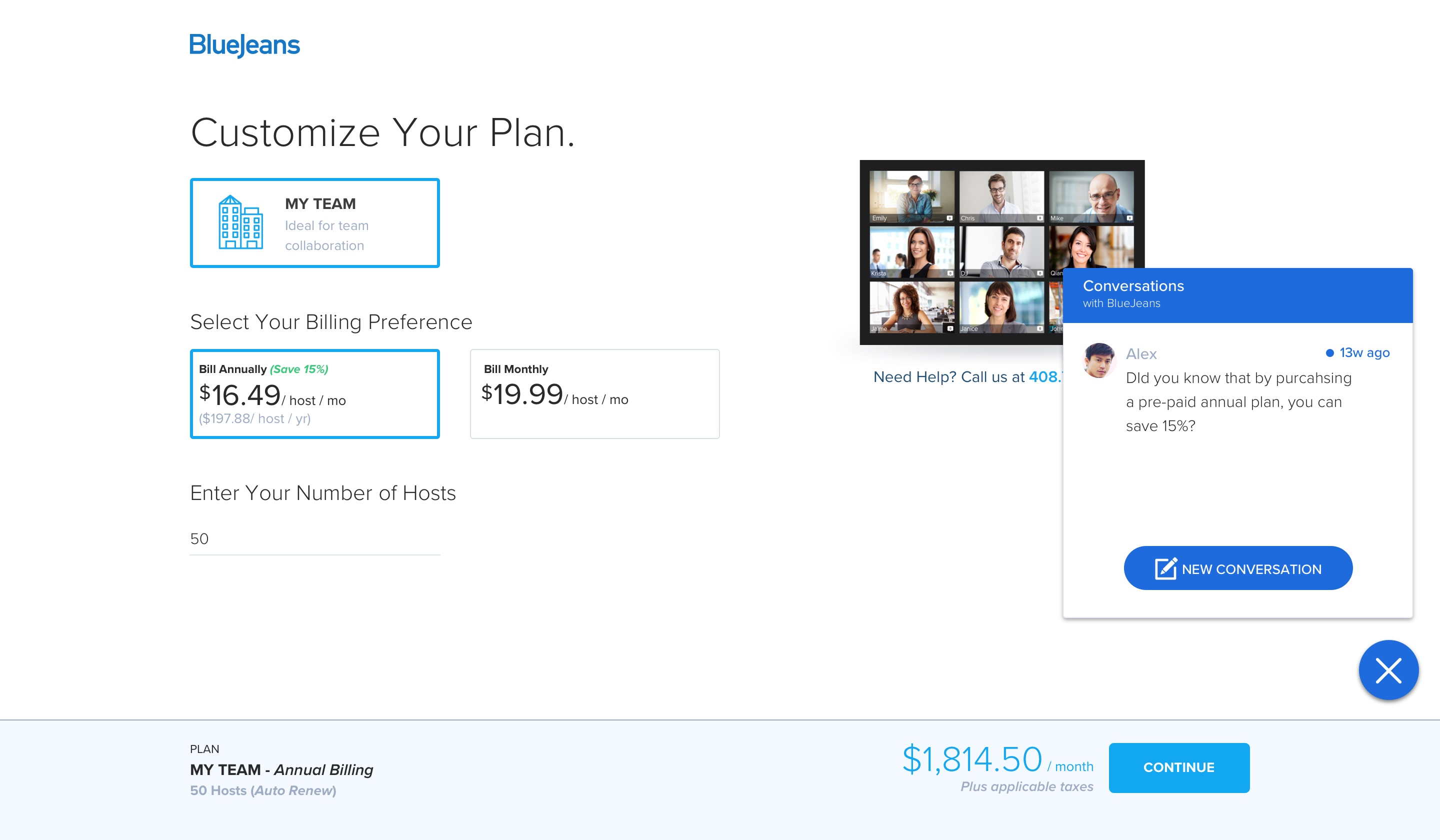
A standard checkout didn’t fit how BlueJeans sold. Acro built a custom self-service checkout in Drupal Commerce. Customers chose a plan, the number of hosts and monthly or annual billing. Then they created an account and added their billing details. After payment, the checkout ran account and subscription set-up behind the scenes.
Customers paid by card. They typed their card details into Zuora’s own payment form, shown inside the checkout. The checkout read the plans and the payment details from Zuora as each order went through. Then it sent the order to BlueJeans’ own link to Zuora, which created the subscription.
Zuora kept control of subscriptions & billing
The checkout read plans and payment details from Zuora, and BlueJeans’ own link to Zuora created the subscription there. So the store didn’t need a second billing system of its own. Avalara worked out the tax, through Zuora. Prices showed in US dollars, British pounds or euros. Customers paying in pounds or euros could add a VAT number.
After the sale, customers managed billing themselves
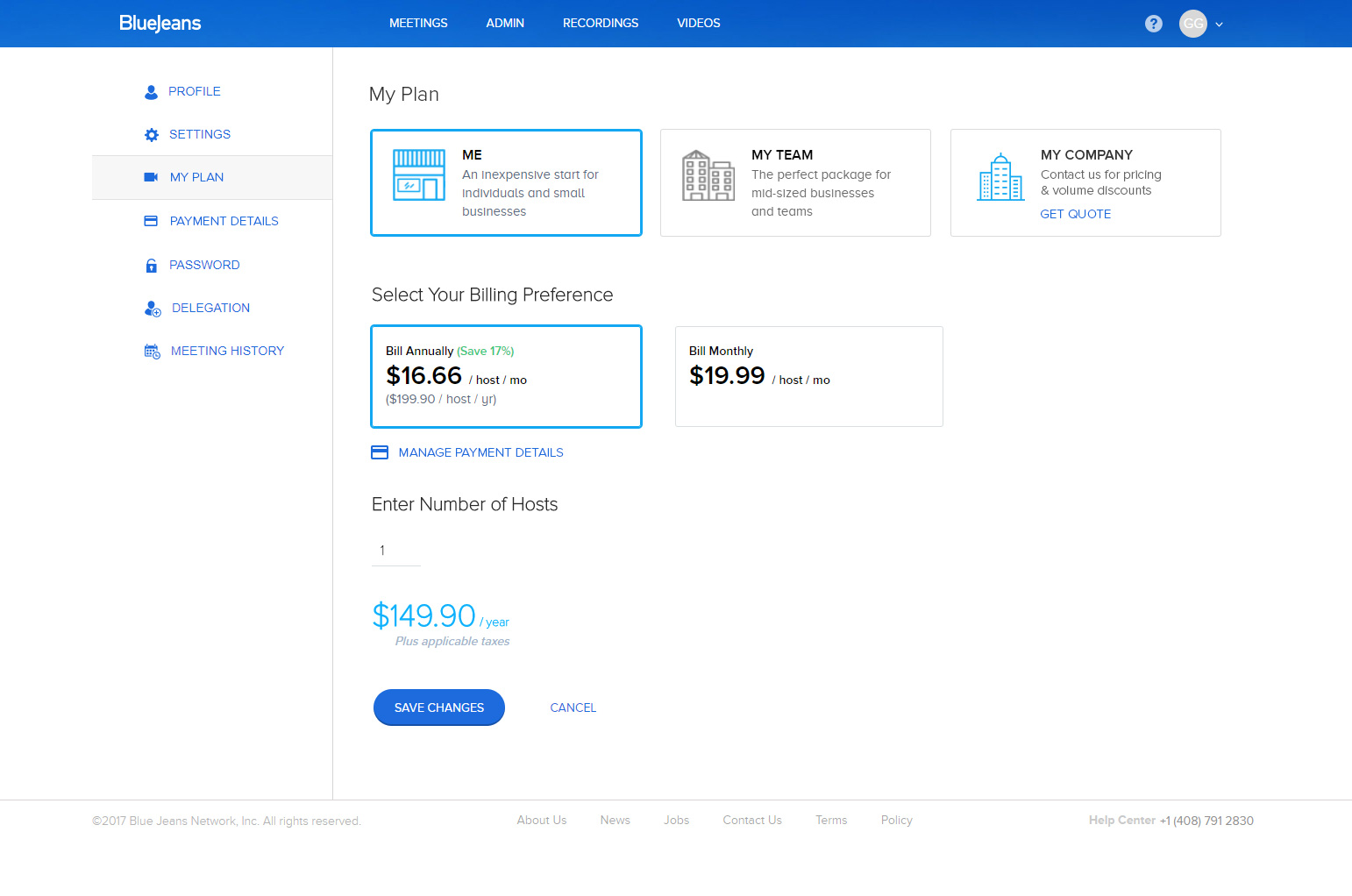
My Billing pulled subscription and billing details from Zuora. Customers could see their licence details and past invoices. They could add or remove a saved card. They could preview what an upgrade would cost, or cancel their subscription.
The upgrade checkout, which Acro added in August 2017, let existing customers buy more. The store also took free trial sign-ups. Much of My Billing and the trial sign-up came from other contributors to the code.
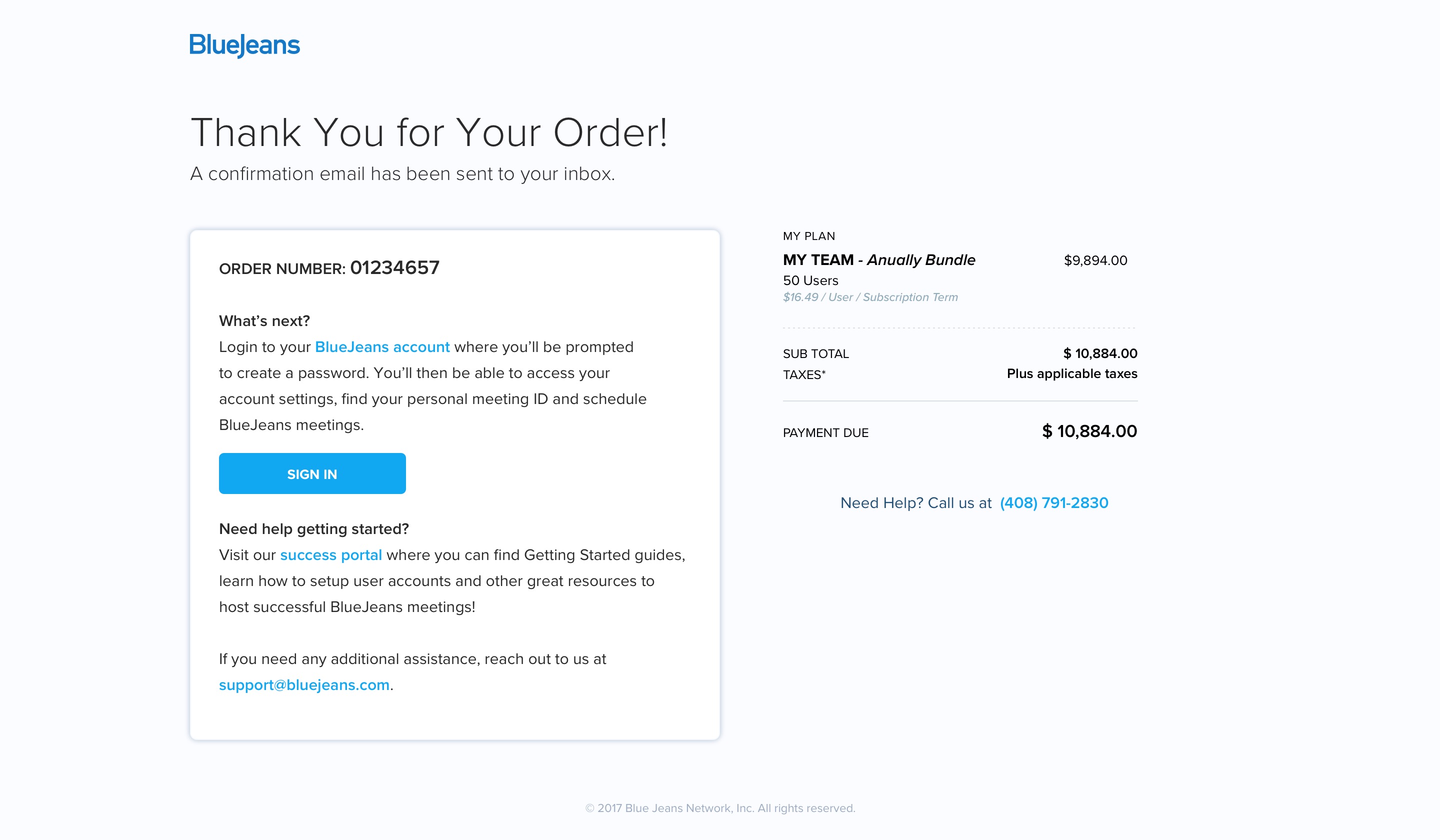
A successful checkout created the customer’s BlueJeans account, checked they could buy and started the subscription. Customers could then sign in without calling sales.
When a step failed, the store opened a support case in Salesforce instead.
Project features
Your customers shouldn’t have to call for every order
BlueJeans’ checkout had to work with its billing and account systems. Your business has its own rules, and your portal has to follow them.
Start with three questions:
- Which orders could customers place themselves?
- Which system controls pricing, billing and account access?
- What should happen when an automatic step fails?
Get those answers before choosing a platform. They decide whether customers can order online without creating more work for your team.