

Decoupled SHOPIFY
We Build B2B Shopify Sites Without Limitations
Too many B2B merchants discover late in the process that native Shopify features can’t support contract pricing, complex catalogs, or credit terms.
That’s where a decoupled build comes in. It frees your storefront from platform limits, so you get the site your business actually needs.
| Video: Thinking of using Shopify for your B2B commerce site? Shae Inglis, CEO of Acro Commerce, shows how to move beyond the built-in features to create a truly seamless system that scales with your business. Download: Get the cheat sheet & score card |
Decoupled Shopify sites like these
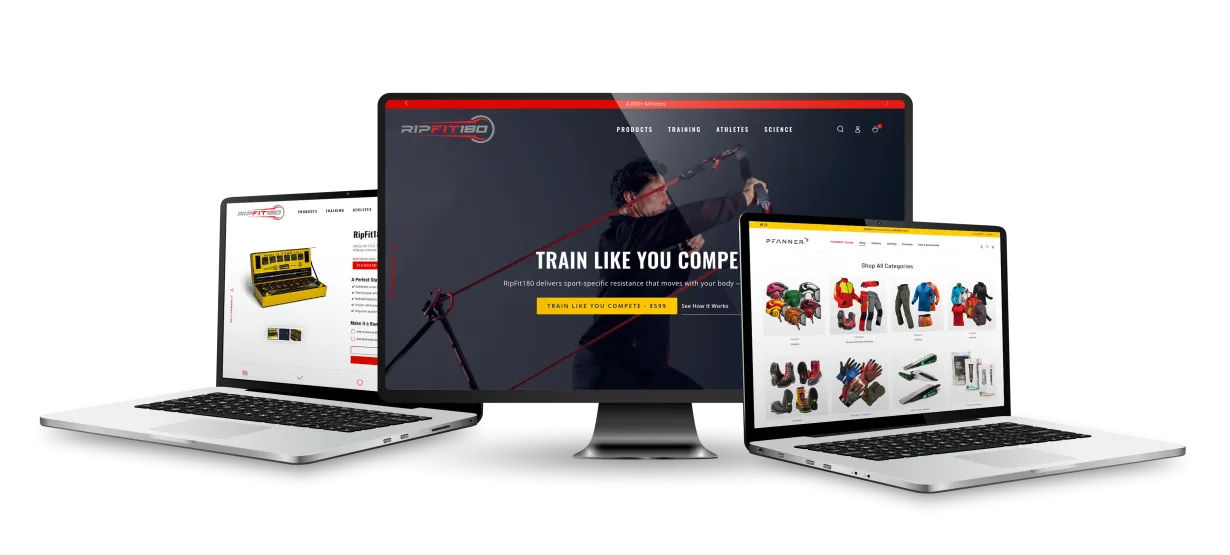
A few of our clients who planned first to get the Shopify site their business needed.



Trusted by Industry Leaders
“Starting with Discovery & Strategy gave us the clarity to build a Shopify site that customers and staff actually use”
— VP of Operations, Midland Components
Challenges
What too many B2B merchants realize too late
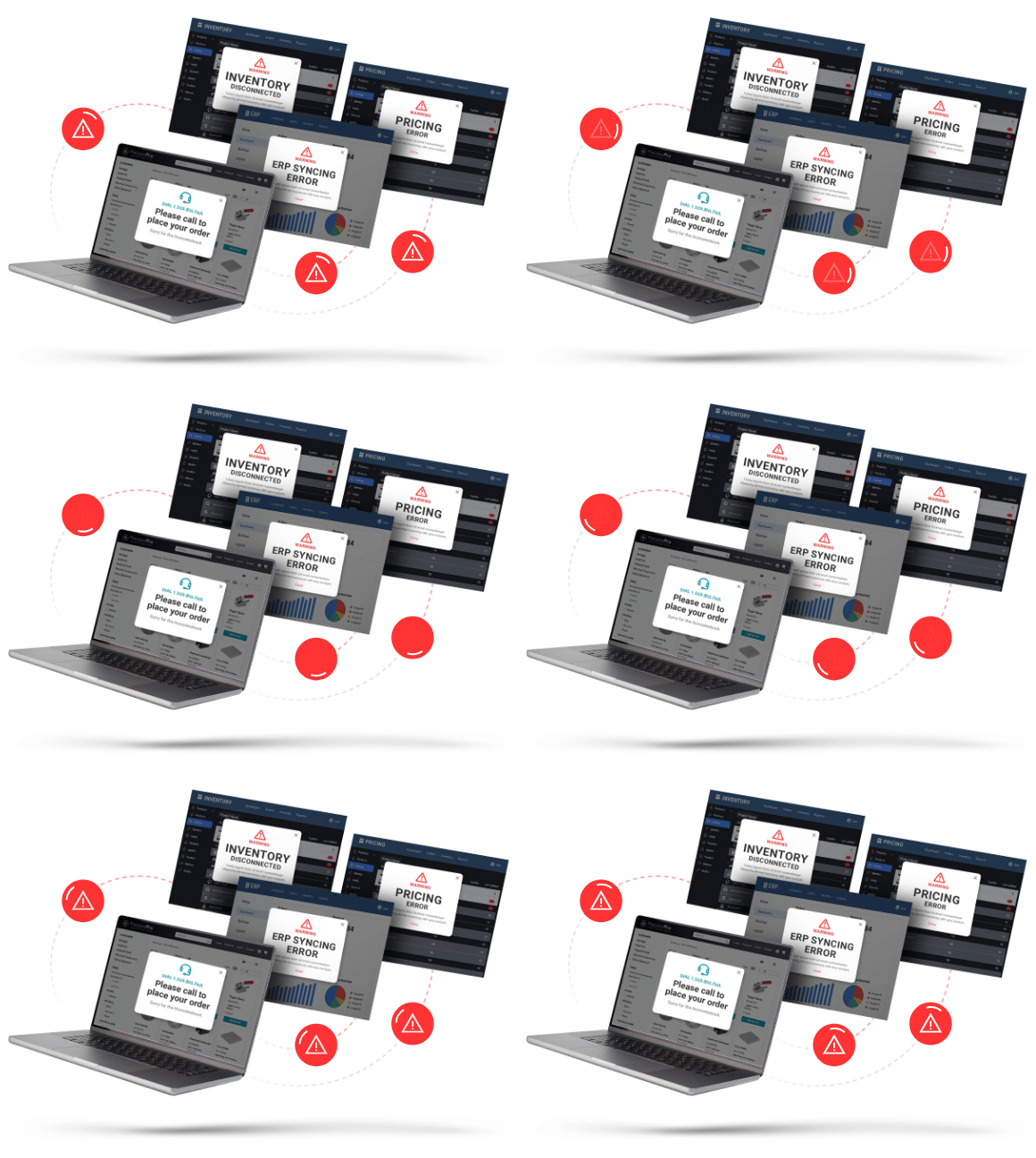
Buyers expect self-service
75% of B2B buyers prefer a rep-free sales experience.
— Gartner, B2B Buying Journey
Digital experience drives loyalty
40% of B2B buyers switch suppliers after a poor digital experience
— McKinsey & Co, The new B2B growth equation
High-value deals are moving online
70% of decision-makers are open to making self-serve or remote purchases over $50,000.
— McKinsey, How COVID-19 Has Changed B2B Sales Forever
Few companies keep pace
63% of sales leaders say digital buying will reshape their industry, but only 37% are prioritizing it.
— Forrester, The State of Business Buying, 2024
Platform considerations we assess in Discovery & Strategy
Shopify’s B2B capabilities are powerful, but there are requirements and limits that must be considered before you build.
Planning around these areas up front shows where native Shopify will carry the load and where a decoupled build might be warranted.
- Plan requirement: B2B features are available only on Shopify Plus.
- Account model: B2B customers must be set up as companies with locations and assigned users, and new customer accounts are required.
- Incompatible features for B2B orders: Accelerated checkouts (Shop Pay, Apple Pay, Google Pay, Amazon Pay), local delivery, pickup points, tipping, subscriptions, store credit, legacy customer accounts, some third-party apps, and checkout.
- Features turned off by default for B2B: Discounts, manual payment methods, pickup in store, Scripts that affect line-item discounts, abandoned checkouts, and gift cards at checkout. These can require enablement via Support or alternative approaches.
- B2B order limits: Orders max 500 line items (draft orders max 200). Exceeding these limits causes order failure.
- Variant and options limits: By default, products support up to 100 variants and three options per product.
- Pricing and catalog control: Use Price Lists and Catalogs to define which products and prices each company/location sees.
- Markets and B2B store type choices: Decide early between blended (DTC + B2B together) or dedicated B2B stores, and how B2B with Markets will shape pricing and publishing by region.
Results
What a Decoupled Shopify build makes possible


Real-time contract pricing: margins are preserved, and buyers see the correct pricing instantly.
Inventory by location: fewer split shipments, lower fulfillment costs.
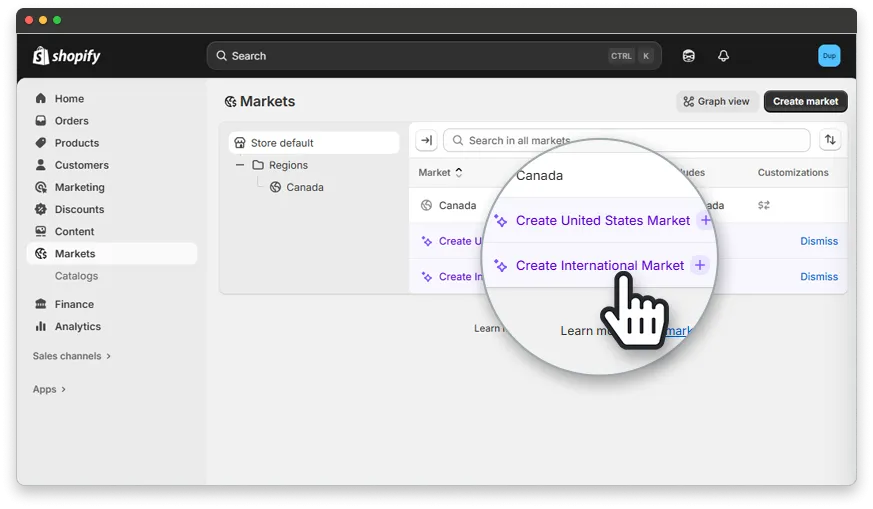
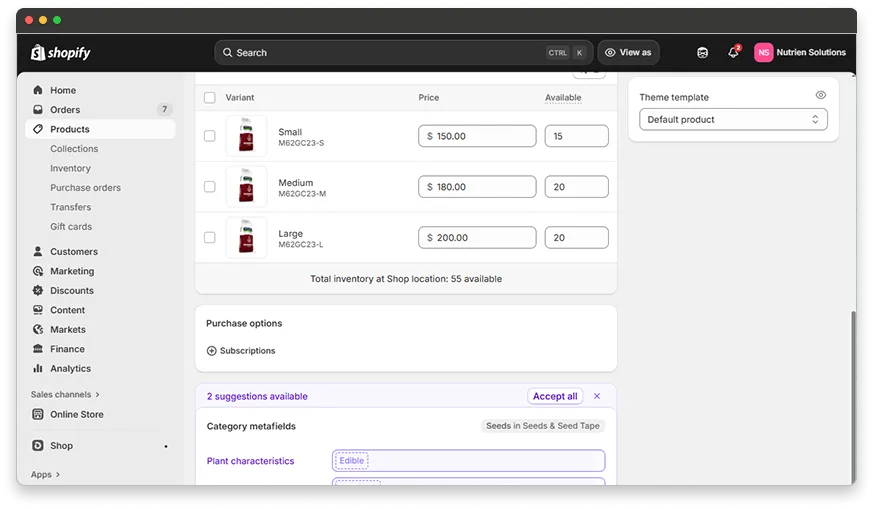
Complex configurators: one clean SKU, fewer order errors.
Net-30 with instant credit checks: higher conversion, risk controlled.
With a well-planned build:
- Your storefront scales with your catalog and workflows instead of holding them back.
- Orders flow cleanly into ERP and ecommerce systems with fewer errors.
- Sales teams focus on growth instead of troubleshooting.
And the business impact is measurable.
"Companies that lead in customer experience grow their revenue two to three times faster than their peers."
— McKinsey, Experience-Led Growth: A New Way to Create Value

“Discovery & Strategy gives our clients the clarity to move forward with confidence. By mapping priorities, risks, and opportunities first, we create a foundation that makes every build more effective and every investment easier to measure.”
— Davis Froese, Acro Commerce Account Manager
Ready to plan a Shopify site that works for your business?
Through our 4-step Discovery & Strategy framework, we align buyer needs with your existing systems, whether that means improving a limited setup or building a decoupled site from the ground up.
The result is a build-ready plan that delivers from day one.
What we offer
Shopify builds that fit your business
Every business is different. That's why we:
- Map how your customers and staff work today.
- Connect to your ERP and ecommerce backend.
- Deliver storefronts that go beyond templates and actually fit your workflows.

Decoupled shopify
Frequently Asked Questions
What is "Decoupled Shopify" and why do B2B brands need it?
Standard Shopify is powerful but rigid. "Decoupled" means we separate the customer-facing design from the backend logic. This allows us to deliver Decoupled Shopify for B2B, giving you the marketing flexibility and stability of the Shopify ecosystem while bypassing its native limitations to handle complex ERP requirements directly.
Can Shopify handle our complex contract pricing and trade agreements?
Native Shopify struggles with complex matrices, but a Decoupled build does not. We bypass Shopify's pricing engine entirely for logged-in users. Instead, we display ERP-driven pricing and inventory in real-time. Your customers see the exact price defined in your ERP — down to the penny and negotiated tier — without manual syncing or data duplication.
Can we show different product catalogs to different customers?
Yes. In a manufacturing context, not every dealer should see every SKU. We implement buyer-specific catalogs that curate the experience based on the user's login credentials. This ensures dealers only see the products they are authorized to sell, while maintaining a public-facing catalog for general SEO and discovery.
How does Decoupled Shopify handle multi-warehouse inventory?
Standard syncing often leads to "ghost inventory" and backorders. With a decoupled approach, we treat your ERP as the single source of truth. When a customer views a product, we query your ERP in real-time to show availability specific to their shipping region, ensuring the "Add to Cart" button actually means "In Stock."
Do we lose the security of Shopify's checkout if we go "Decoupled"?
No. This is the beauty of the hybrid approach. We use custom code for the shopping experience (pricing, catalog, logic) but hand the user back to Shopify for the actual transaction. This leverages the world's best commerce engine for payment processing and security, ensuring you don't take on the compliance risks associated with fully custom checkout flows.
Why shouldn't we just use the native Shopify B2B features?
Native Shopify B2B is excellent for simple wholesale, but it hits a wall with complex manufacturing logic. If you need credit limit approvals, split shipments across warehouses, or intricate CPQ (Configure, Price, Quote) tools, you need to expose ERP logic in the storefront. Decoupled Shopify allows this; native Shopify often does not.
Ready to get started?
It’s time to build for the people who use your Shopify site every day
A Shopify site should make life easier for both your customers and your staff. With the right planning, you get a tool people will actually use. One that works the way your business runs.