
Discovery & Strategy
Decoupled Shopify Planning Package
Shopify is built for speed. Scaling it takes planning.
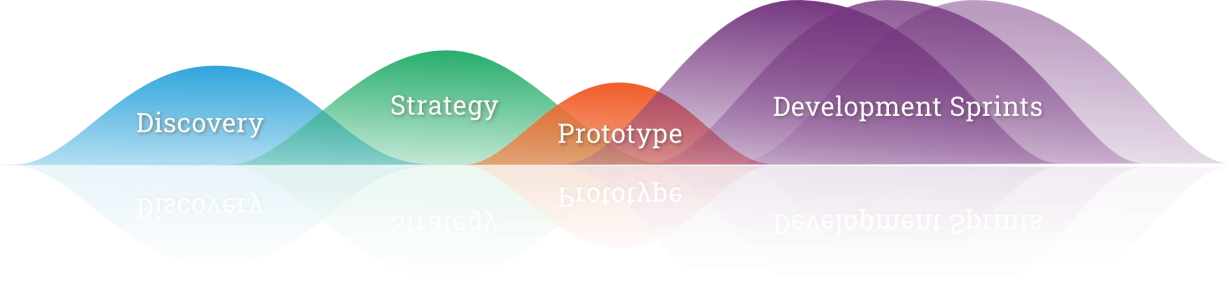
Our 4-step Discovery & Strategy Framework ensures your store can handle B2B and D2C demands without rework or rebuilds.
The result is certainty in the form of a clear plan, with a store designed for growth, clear decisions on when to use native Shopify features, and when to decouple for flexibility.

Why Discovery & Strategy pays for itself
- Prevent costly rebuilds
Shopify Plus offers powerful B2B features, but they come with limits. Account structures, variant caps, and checkout restrictions can stall growth if not planned. Our Discovery & Strategy process models these constraints up front so you avoid mid-project resets. - Accelerate delivery
With system diagrams, data models, and a working prototype, design and development teams know exactly how to implement. Projects launch faster because decisions are made early. - Protect the customer experience
Incorrect pricing, account misconfiguration, or slow catalogs erode trust. Planning ensures buyers see the right data every time and experience smooth checkout without workarounds. - Proven outcomes
One client avoided a potential misfire by validating Shopify Plus limits during Discovery & Strategy. Planning gave them confidence to extend Shopify instead of building a custom ecommerce solution.
What Discovery & Strategy delivers
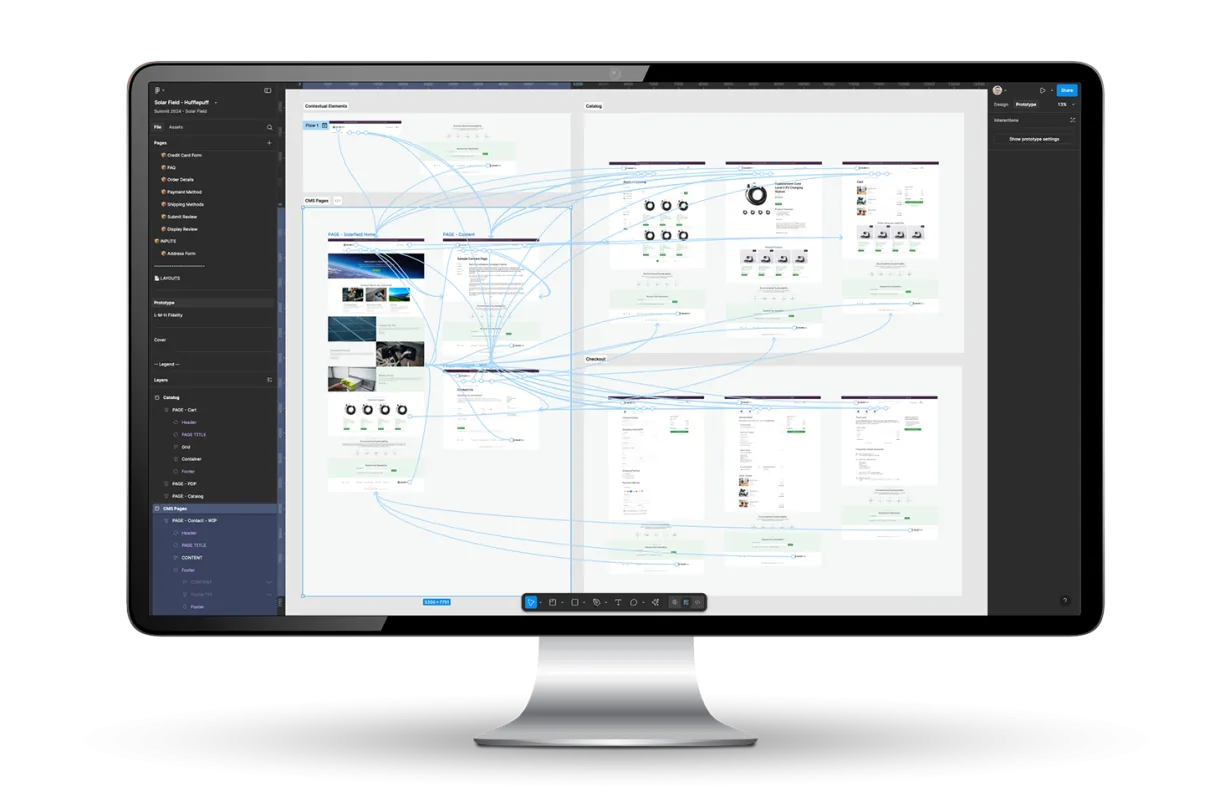
Clickable prototype
You and your team will get to log in and click through your Shopify build before we touch code.
Not slides. Not static screens. A working model that shows how accounts, catalogs, and checkout behave. Sales can test how B2B orders run. Operations can test inventory accuracy. Leadership can see how the store scales.
We do this with you in the room. Your team clicks through it. Your questions shape the plan. Gaps surface before development, so adjustments are quick and cost you nothing to unwind.
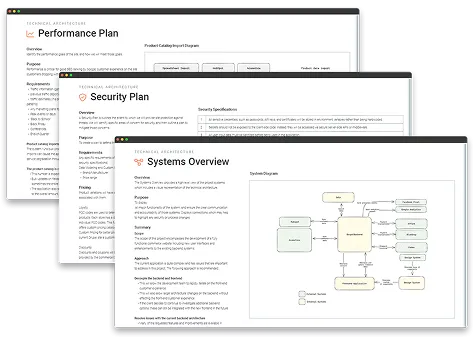
Technical blueprint
Picture Shopify at the center of your stack…
Connected to ERP, CRM, Product Information Management (PIM), and marketing tools. Product data structured against Shopify’s limits. Price lists tied to accounts. Markets aligned to regions. For many merchants, this is the first time they see where Shopify carries the load and where decoupling adds flexibility.
That diagram, with data models and integration requirements, becomes the blueprint both sides sign before development begins.
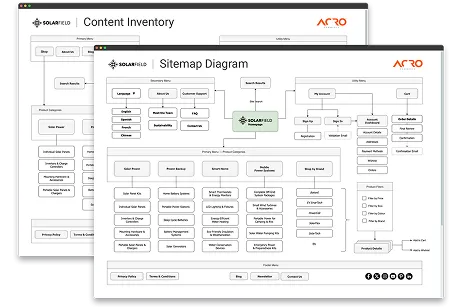
Information architecture
Without clear IA, a Shopify store buckles under complexity.
Large catalogs. Multiple roles. Regional publishing. We define navigation, catalog segmentation, and account rules so customers see the right products and prices every time.
Clean in design. Clean in function.
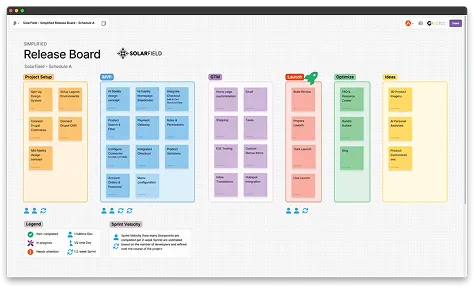
Estimates & phased roadmap
No gambling on open-ended budgets.
You leave Discovery & Strategy with a clear backlog of priorities, each matched to a budget and a delivery window. MVP first. Growth phases next. Timeline windows set. Ambition turns into a schedule your team can deliver.
Most Decoupled Shopify planning engagements are completed in 2 to 4 weeks. Pace depends on your catalog size and how many workflows we validate together.
What every Shopify build must get right
- Account and role design
Plan buyer hierarchies, approvals, and company accounts up front. Clear permissions prevent mistakes and protect trust. - Catalog architecture within limits
Model products against Shopify’s variant and publishing limits before design begins. Structure now or rebuild later. - Checkout and pricing alignment
Tie price lists, contracts, and terms to accounts through clean ERP syncs. Customers should see the right numbers every time. - Integration ownership and data flow
Decide which system owns each field. Eliminate duplication, define sync cadence, and protect order integrity. - Performance and scale
Set a performance budget for large catalogs and multi-region publishing. Keep page load and search fast under real traffic. - What to decouple, and when
Use Shopify where it excels. Decouple only where flexibility or speed to market requires it, with a clear boundary. - Growth roadmap
Phase from MVP to expansion with budgets and timelines. Today’s choices should not block tomorrow’s markets.
How the engagement runs
- Kickoff and interviews.
We listen across sales, operations, IT, and support. - Information architecture.
Navigation, catalog rules, and content structures are mapped so the foundation is clear. - Technical planning.
Data movement, integrations, and performance are designed in detail. - Prototype.
A working model shows the most important flows, built on IA and technical planning. - Iteration.
Your feedback drives changes. Edge cases are captured. - Blueprint sign-off.
You approve the prototype, diagrams, and roadmap. Delivery begins with confidence.
What good planning ensures
Plan for clarity. Build with confidence.
Want to learn more about Discovery & Strategy?
Our 4-step Discovery & Strategy Framework helps you clarify priorities, align your team, and map the right path forward across systems and initiatives.
Whether the plan calls for strengthening what you already have or preparing for something new, you get a roadmap designed to deliver from day one.