


ERP Integration Expansion
We Extend Your ERP So It Supports Growth Instead of Slowing It
ERP systems are built to be the single source of truth. But growth exposes the gaps between ERP and the systems that depend on it.
We extend your ERP into commerce, portals, and customer-facing systems so it stays the core record while supporting your next stage of growth.
| Video: Interested in expanding your ERP’s capabilities? In this video, Jace Anderson, Acro Commerce’s VP of Sales, explains why data flow alone isn’t enough, and how planning the right logic, visibility, and workflows keeps your ERP from stalling growth. Download: Get our cheat sheet. |
ERP expansions like these
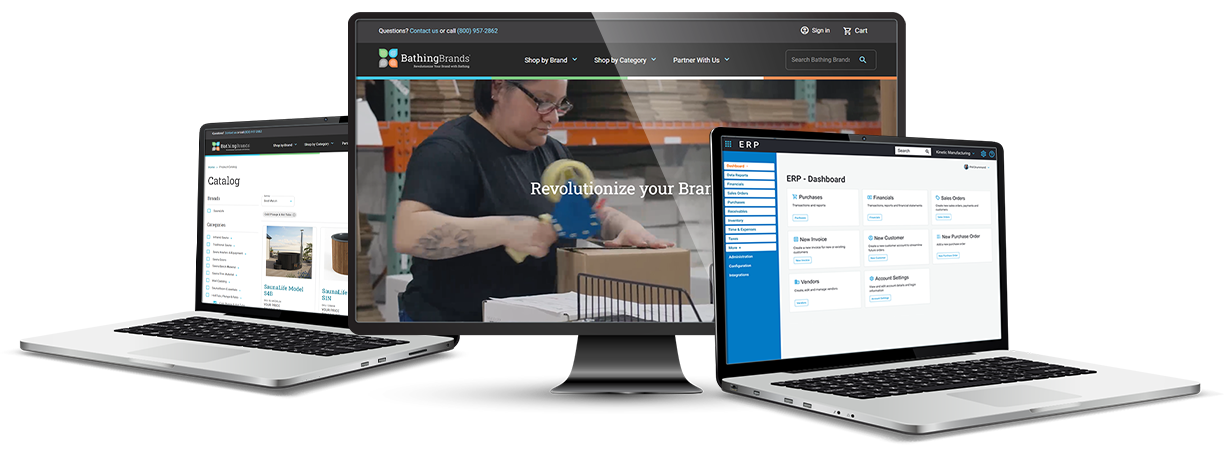
A few of our clients who expanded ERP data into the systems their business depends on



Trusted by Industry Leaders
“Discovery & Strategy showed us where our integration logic fell short and how to fix it. We stopped patching and shipped workflows our teams actually use.”
— VP of Operations, Crescent Supply Group
Challenges
What too many B2B merchants realize too late
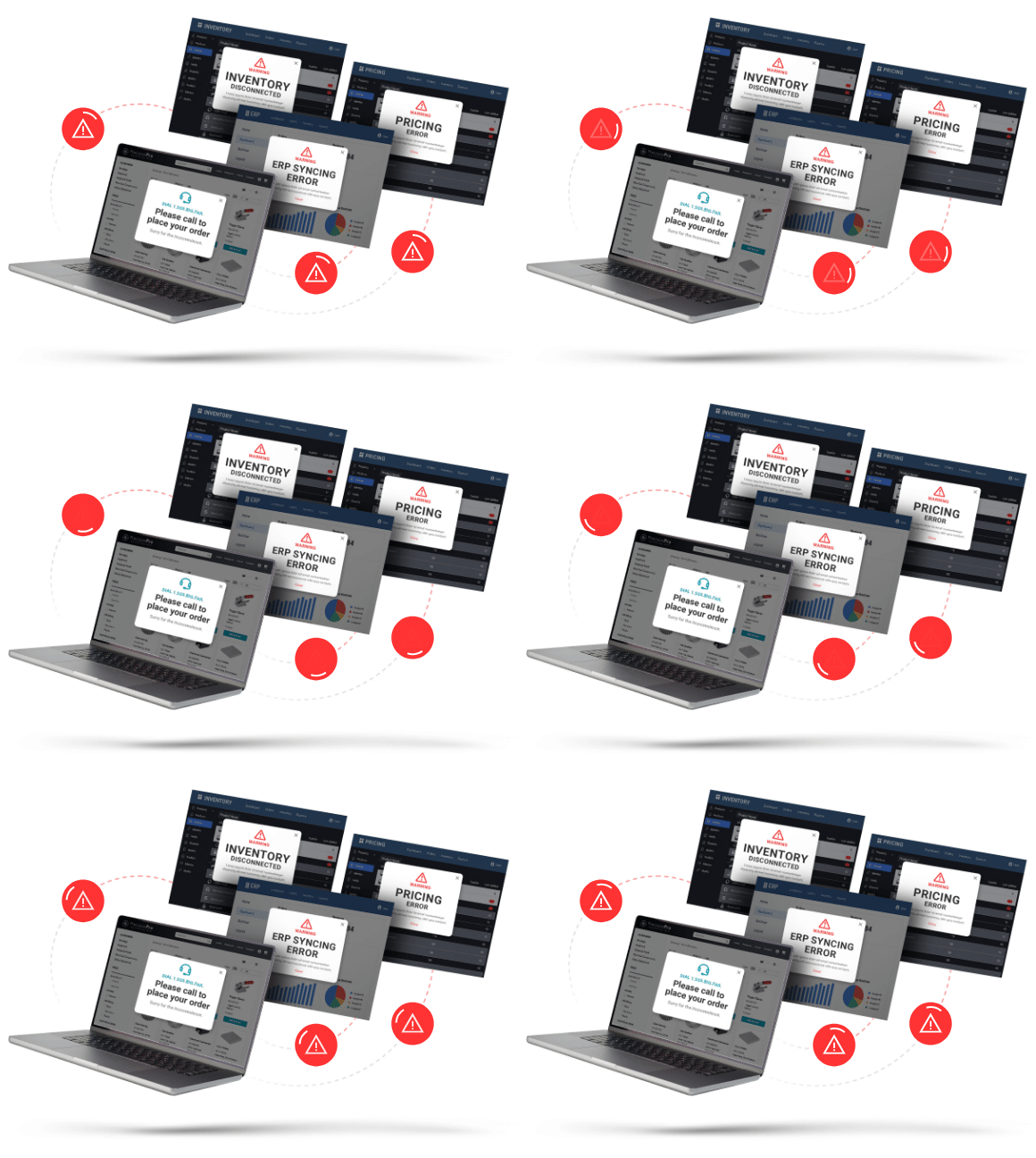
ERP initiatives miss the business case
By 2027, more than 70% of recently implemented ERP initiatives will fail to fully meet their original business case goals. As many as 25% will fail catastrophically.
— Gartner, Enterprise Resource Planning to Optimize Operations
Manual workarounds multiply
Integration debt grows when data arrives late or in the wrong format, which slows finance, sales, and operations.
— Deloitte, ERP Transformation: Empowering CFOs for Strategic Financial Excellence
Automation is the real unlock
When automation is tied directly to ERP, operational efficiency, resiliency, and profit growth increase.
— IDC, How Intelligent Automation Services Help Organizations Improve Enterprise Intelligence
Cash flow depends on integration quality
Digital accounts receivable and invoicing reduce effort and shorten days sales outstanding (DSO) when reminders and payment rails are integrated.
— Forrester, Total Economic Impact Study, Intuit
Results
Endless possibilities when extending your ERP
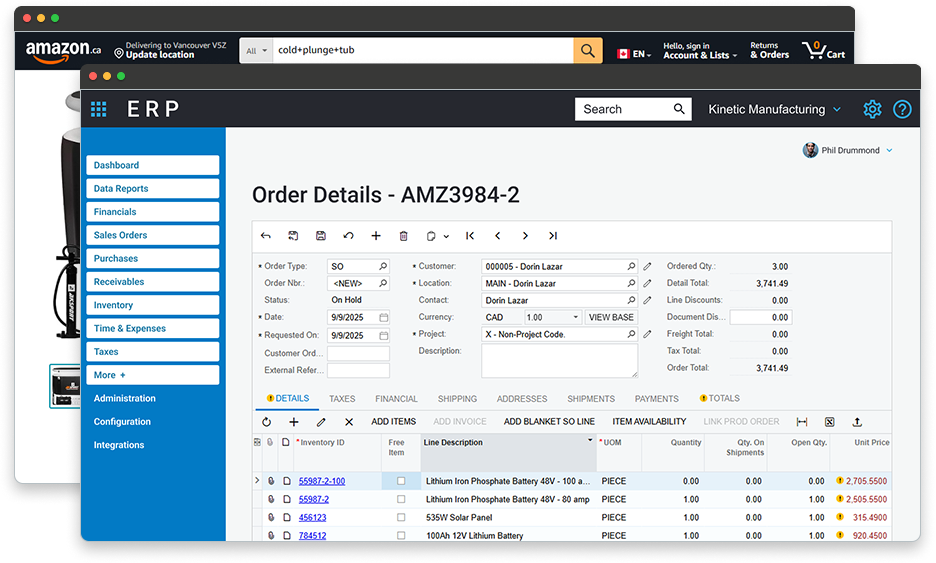
Add a new sales channel in hours.
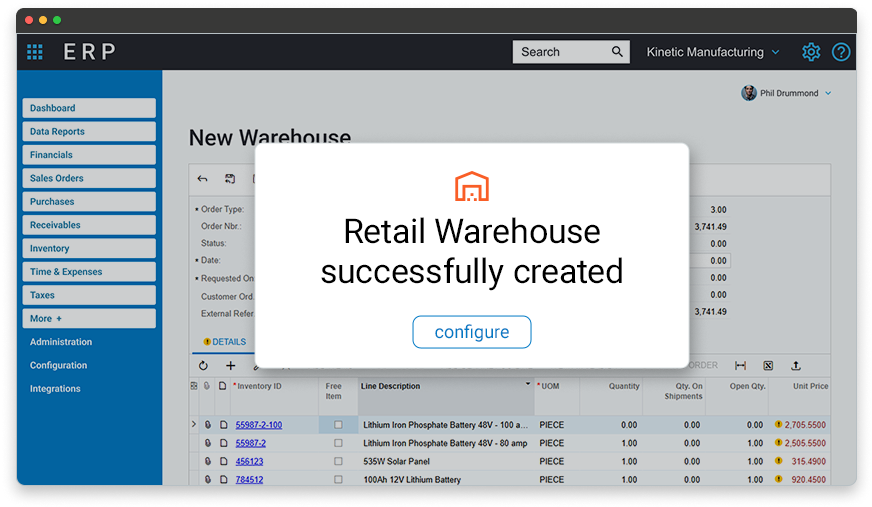
Spin up a warehouse without IT bottlenecks.
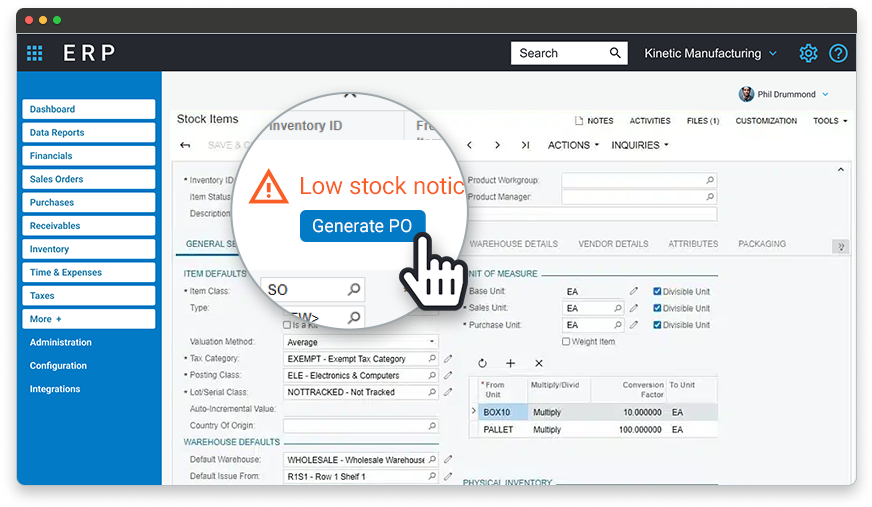
Stockout prevention that protects revenue.
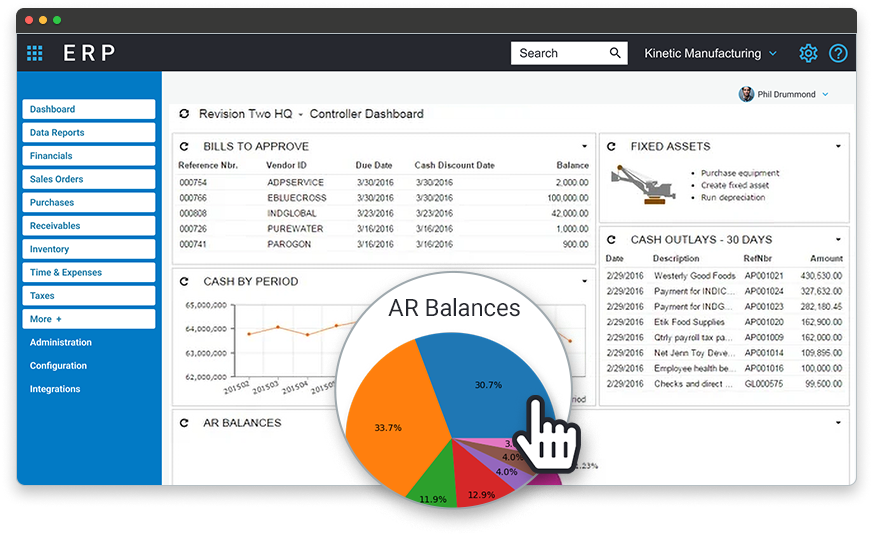
Faster payment cycles.
With the right expansion plan:
- Data flows once, correctly, across sales, service, finance, and fulfillment.
- Teams stop patching workflows and start scaling them.
- Observability and alerts prevent silent failures before they impact customers.
And the business impact is measurable.
Companies that lead in customer experience grow their revenue two to three times faster than their peers.
— McKinsey, Experience-Led Growth: A New Way to Create Value

“Carefree of Colorado faced a critical operational challenge with their ecommerce site: order number mismatches between their WooCommerce platform and Acumatica ERP, causing customer confusion, duplicate orders, and manual reconciliation.
Using a comprehensive Discovery & Strategy Framework, we pinpointed the root cause and implemented a two-phased solution.
This "no-touch" system is set to significantly reduce manual intervention, with a future goal of sending specific orders directly to production.”
— Charlee Eason, Acro Commerce Account Manager for Carefree of Colorado
Ready to turn ERP integration debt into bankable workflows?
Through our 4-step Discovery & Strategy framework, we map your end-to-end processes, surface latent constraints, and design the logic, events, and guardrails that extend your ERP into the workflows your business relies on.
The result is a build-ready plan that delivers from day one.
What we offer
ERP integration & expansion that fits your business
Every business is different. That's why we:
- Map cross-functional flows across sales, service, finance, and ops.
- Design event-driven logic and transformations your users actually need.
- Add observability and alerting to ensure issues surface before they impact customers.
- Extend ERP into marketplaces, payments, tax, shipping, and portals without piling on manual steps.
- Use an API-led approach, so you can add or replace systems without breaking your front end.
ERP Integration Expansion
Interested in expanding your ERP’s capabilities?
Jace Anderson, Acro Commerce’s VP of Sales, shows why data flow alone isn’t enough, and how planning the right logic, visibility, and workflows keeps your ERP from stalling growth.
ERP Integration Expansion
Frequently Asked Questions
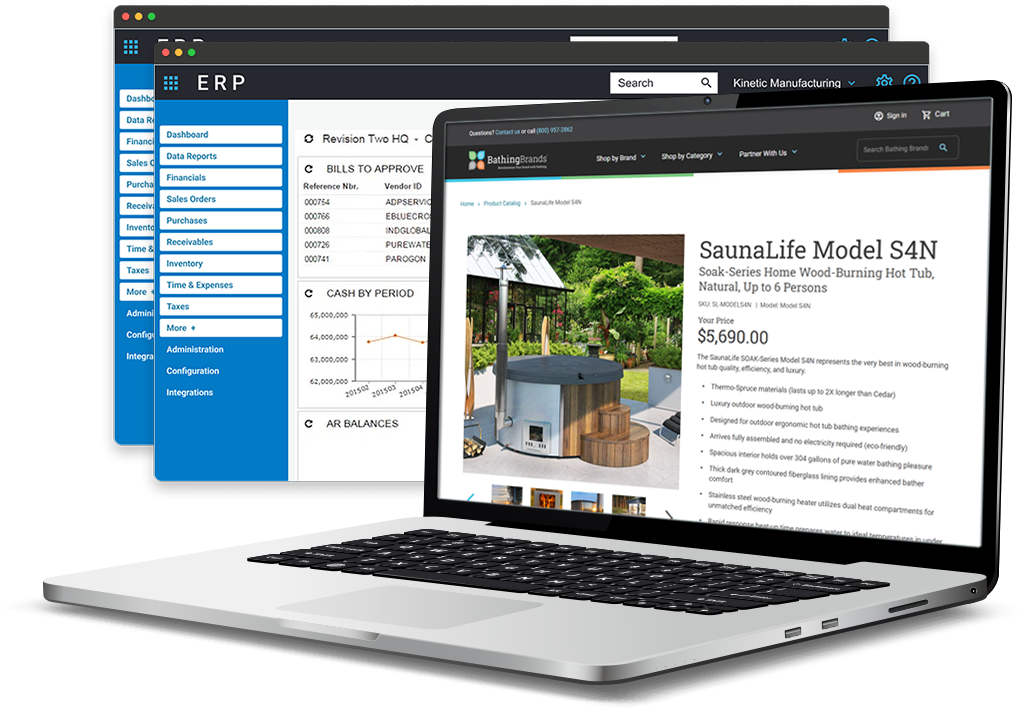
Standard integration just syncs data (moving A to B). ERP Expansion extends your business rules to the web. Instead of just copying a price list, we expose ERP logic in the storefront. This means complex functions—like tiered quantity breaks, credit limit checks, and customer-specific catalogs—run online exactly as they do in your back office, without manual duplication.
By treating your ERP as the single source of truth. We don't build a separate "website database" that needs constant updating. We architect the connection so that the ecommerce platform polls your ERP for real-time inventory availability. If a unit is sold over the phone, the website knows instantly, preventing costly backorders and customer frustration.
Yes. This is a non-negotiable for B2B. We build integrations that pull contract pricing online directly from the ERP. When a customer logs in, they don't see generic MSRP; they see their negotiated rates, volume discounts, and payment terms. This allows you to offer a self-service buying experience that honors your existing sales agreements.
It shouldn't. We advocate for a Decoupled Shopify or BigCommerce approach. By "decoupling" the frontend from the backend, we can connect robust ERPs (like Acumatica, Sage, or NetSuite) to modern ecommerce platforms without being locked into a rigid "all-in-one" suite. You get the stability of your ERP and the marketing flexibility of a top-tier commerce engine.
We turn integration debt into bankable workflows. By automating high-touch processes—like order entry, invoice retrieval, and shipment tracking—you reduce the "cost to serve" for every account. Your sales team spends less time acting as data entry clerks and more time closing deals, while your customers enjoy a 24/7 self-service portal.
AI requires clean, accessible data. A siloed ERP is a "black box" to modern AI tools. By integrating and normalizing your data for the web, we effectively prepare ERP data for AI. This structure allows future LLMs and AI agents to read your catalog and inventory data, enabling features like automated customer support and intelligent product recommendations.
Ready to get started?
It’s time to make your ERP the hub it was meant to be
With the right plan, your ERP remains the trusted source of truth while extending seamlessly into commerce, portals, and operations.
The result: a system that scales with growth instead of holding it back.