
Discovery & Strategy
ERP Expansion Planning Package
Your ERP is a treasure trove of data.
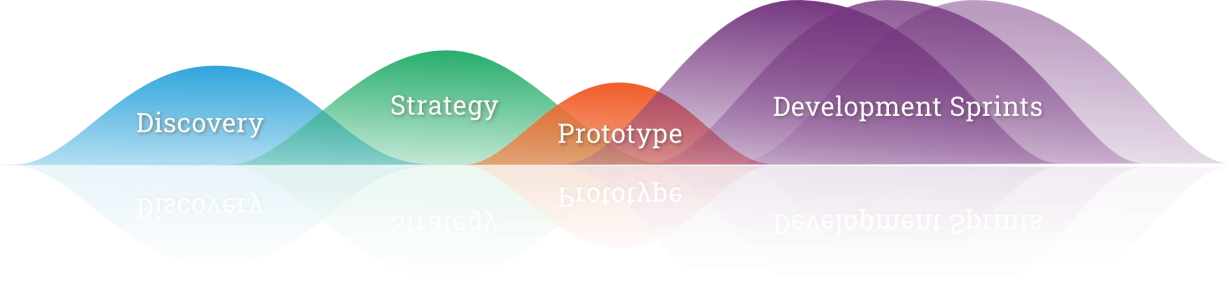
Our 4-step Discovery & Strategy Framework ensures your ERP remains the single source of truth while extending its reach across commerce, service, and operations.
The result is certainty in the form of a clear plan, with the right data in the right places, in the right format, without endless patches.
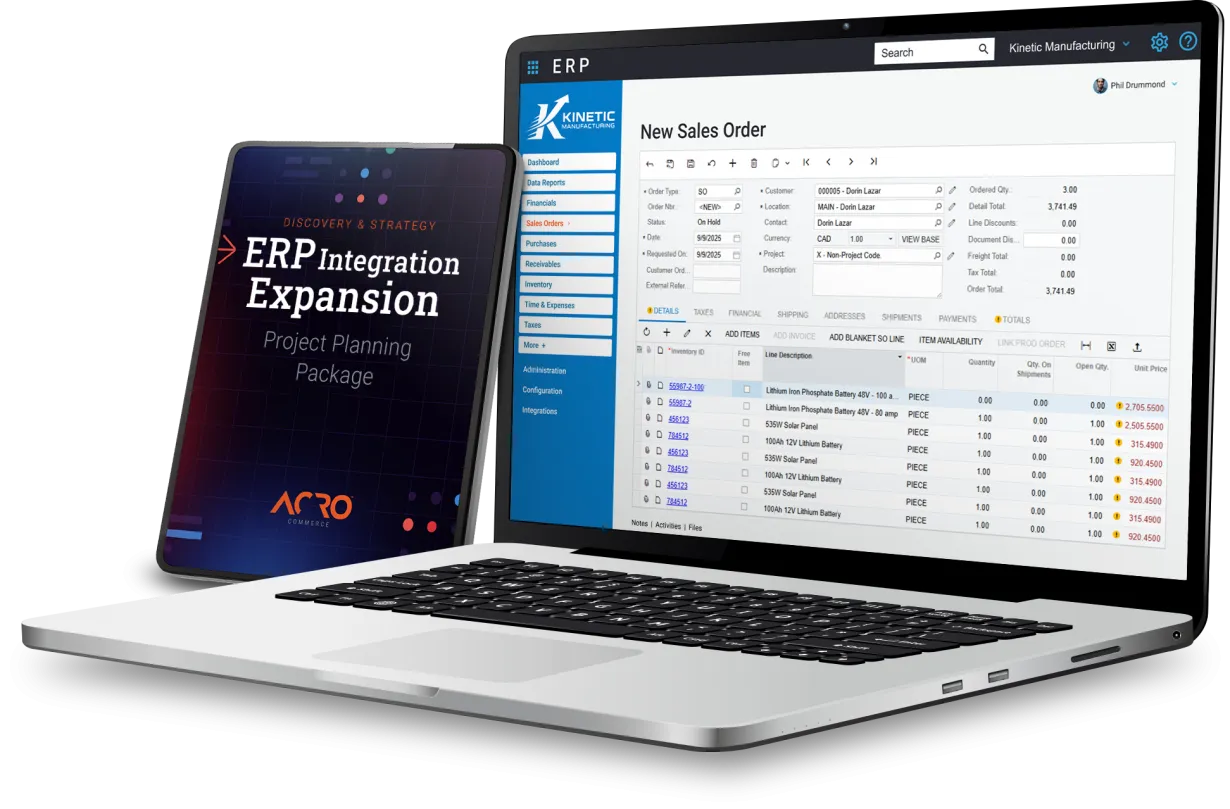
Why Discovery & Strategy pays for itself
- Prevent endless patches
Too many ERP integrations “work” until sales launches bundles, service needs history, or marketing wants product feeds. Then patches pile up. Our planning prevents that cycle by modelling every flow before development. - Accelerate future builds
With a tested data flow diagram and signed requirements matrix, new storefronts, portals, or apps can launch without guesswork. The ERP is stable, the integrations predictable. - Protect customer trust
When data fails, confidence fails. Planning ensures buyers and reps always see accurate pricing, inventory, and order history, so trust in the ERP never erodes. - Proven outcomes
Clients who invested in ERP integration planning avoided rebuilds that would have cost multiples of the Discovery & Strategy package. The work paid for itself in the first avoided change order.
What Discovery & Strategy delivers
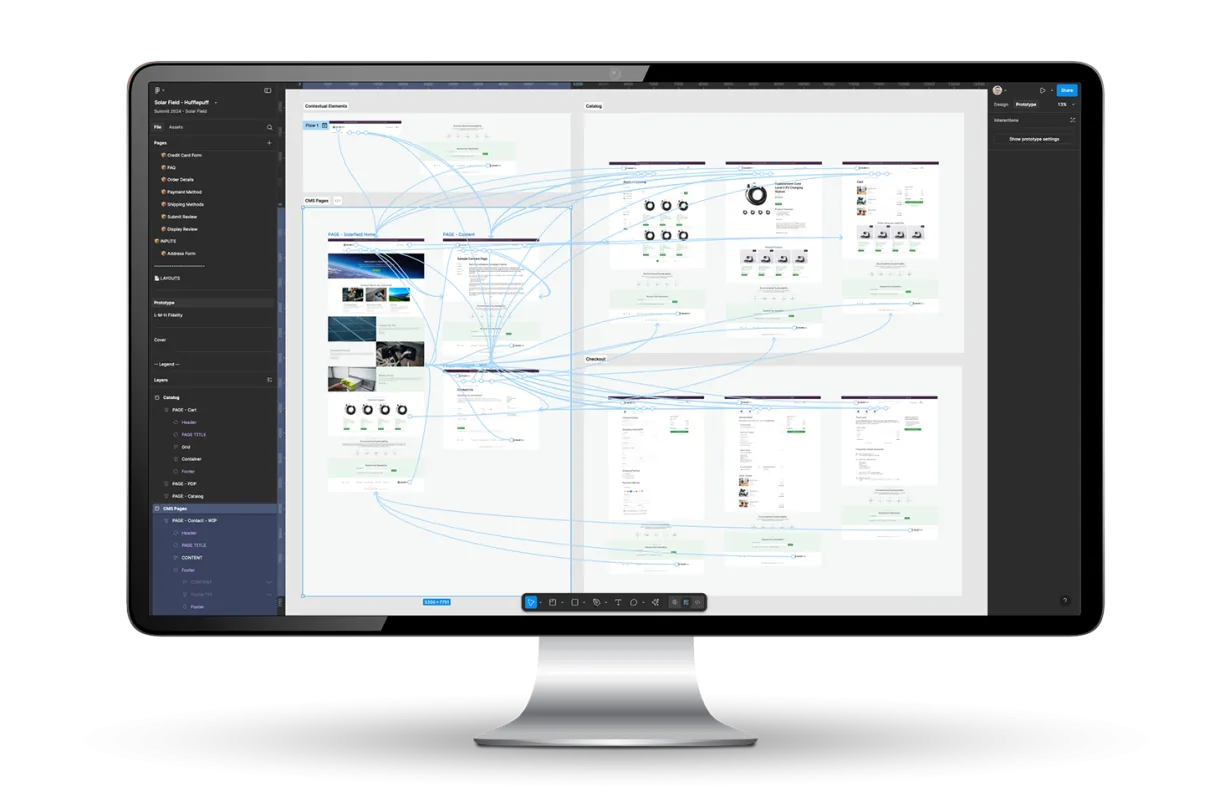
Clickable prototype
You and your team will get to log in and click through integration-driven flows before we touch code.
Orders created. Inventory syncing. Pricing applied. Not slides. Not static diagrams. A working model that shows how ERP data behaves across systems.
We do this with you in the room. Your team clicks through it. Your questions shape the plan. Gaps surface before development, so adjustments are quick and cost you nothing to unwind.
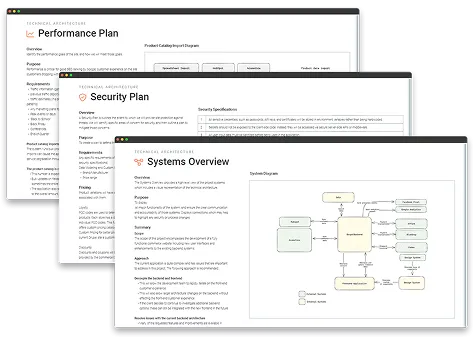
Technical blueprint
Picture your business on one diagram.
ERP at the center, connected to commerce, CRM, Product Information Management (PIM), Warehouse Management System (WMS), and marketing tools. Orders in. Inventory out. Pricing tied to accounts. Data models aligned. For many teams, this is the first time the picture matches how the business actually runs.
That diagram, with data models and integration requirements, becomes the blueprint both sides sign before development begins.
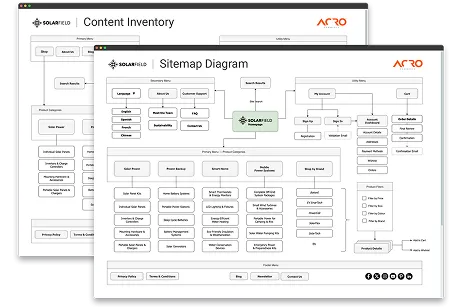
Information architecture
We define how ERP-driven data will surface in storefronts, portals, and dashboards. Navigation, catalog rules, and customer account logic are mapped so every team and buyer sees consistent data.
Clean in design. Clean in function.
Estimates & phased roadmap
No gambling on open-ended budgets.
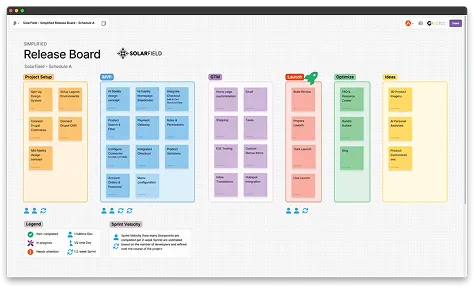
You leave Discovery & Strategy with a clear backlog of priorities, each matched to a budget and a delivery window. MVP first. Expansion next. Timeline windows set. Ambition turns into a schedule your team can deliver.
Most ERP expansion planning engagements are completed in 4 to 6 weeks. Pace depends on the number of integrations we validate together and the availability of your stakeholders.
Supporting elements, such as integration requirements, data models, security, and migration planning, are all captured within these deliverables. They feed into the blueprint, prototype, and roadmap, not as a separate checklist, but as part of the package you sign off on.
What every ERP expansion must get right
- Source of truth
The ERP has to stay the master record. If pricing, orders, or inventory drift into side systems, accuracy dies and trust follows. - Data flows
Every integration needs a defined path in and out. Undefined flows lead to duplication, bad syncs, and costly fixes. - Channel consistency
Storefronts, portals, and reps must all see the same numbers. One mismatch between channels and confidence in the ERP collapses. - Bundle and workflow design
Sales bundles, service history, and marketing feeds break fragile integrations first. If they’re not planned, patches pile up until the ERP is unrecognizable. - Integration ownership
ERP, CRM, Product Information Management (PIM), and warehouse systems each need a clear boundary. Overlap creates conflicts that erode performance. - Performance and scalability
Integrations that can’t handle volume or concurrency drag every channel down. Performance budgets protect growth. - Future-proofing
Every expansion should build on a stable ERP core. Without forward planning, the next store or app triggers another rebuild.
How the engagement runs
- Kickoff and interviews.
We listen across sales, operations, IT, and support. - Information architecture.
Navigation, catalog rules, and content structures are mapped so the foundation is clear. - Technical planning.
Data movement, integrations, and performance are designed in detail. - Prototype.
A working model shows the most important flows, built on IA and technical planning. - Iteration.
Your feedback drives changes. Edge cases are captured. - Blueprint sign-off.
You approve the prototype, diagrams, and roadmap. Delivery begins with confidence.
What good planning ensures
Plan for clarity. Build with confidence.
Want to learn more about Discovery & Strategy?
Our 4-step Discovery & Strategy Framework helps you clarify priorities, align your team, and map the right path forward across systems and initiatives.
Whether the plan calls for strengthening what you already have or preparing for something new, you get a roadmap designed to deliver from day one.